
Strategic Implications
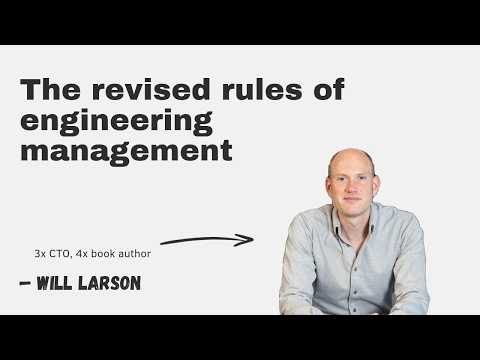
Larson's thesis shifts the value proposition of the engineering leader from 'resource manager' to 'constraint navigator.' By highlighting that software implementation is becoming effectively free, he redirects the value of engineers toward the 'human' side of development: determining what should be built, why, and how it fits into the broader economic landscape.
Evidence & Hype Audit
This content is rooted in experiential evidence rather than controlled data. It is highly trustworthy as a retrospective of how elite Silicon Valley firms operated, though it clearly carries the bias of an executive who thrives in high-urgency, high-agency environments. It avoids the common 'AI will replace everyone' hype, positioning AI instead as a tool that exposes the weaknesses in existing organizational structures.
Counterarguments
Critics might argue that Larson’s model assumes a level of individual agency and technical capability that isn't sustainable for all companies. By prioritizing 'suffering' and 'hard problems,' he risks romanticizing burnout. Furthermore, the 'durable team' model requires a baseline of stability that many organizations—often due to external market volatility—simply cannot guarantee.
Who Should Care
- Engineering Managers: Should audit their current role to see if they are 'process-managing' or 'problem-solving.'
- Staff/Principal Engineers: Should use this as a roadmap for developing strategic, business-aligned judgment.
- CTOs/VPs: Should examine whether their org chart reflects a 'manager-heavy' or 'technically-tethered' reality.
What to Do Next
- Audit your calendar: Are you spending more time on process or technical outcomes?
- Identify your domain: Are you part of a durable team or a constant 'rescue' rotation?
- Practice original writing: Start capturing your own architectural or management philosophy without AI assistance.
- Seek hands-on work: Identify one area of your system where you can contribute a concrete fix, regardless of your seniority.