
Tag: Neanderthals
Were Neanderthals Culturally Modern Humans? - David Reich
The Signal
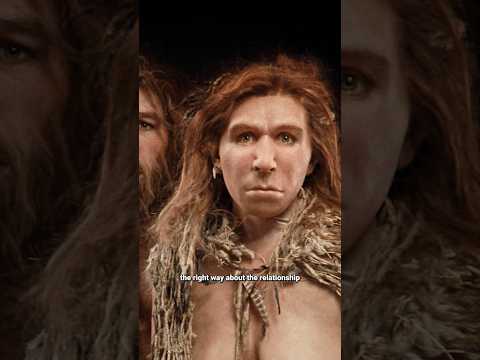
Current genomic evidence confirms a complex evolutionary history where Neanderthals and Denisovans shared a common ancestor between 500,000 and 600,000 years ago, splitting from modern-human ancestors earlier. The central tension lies in whether, despite their distinct genetic lineages, Neanderthals should be conceptually reframed as "culturally modern humans" due to archaeological similarities that defy a strictly genetic understanding of their kinship.
The Case
- Genetic data from the 2010 sequencing of the Denisovan genome established that Denisovans are, on average, more closely related to Neanderthals than either group is to modern humans.
- A separate interbreeding event between 200,000 and 300,000 years ago resulted in modern-human ancestors contributing an estimated 5% of their DNA to the Neanderthal lineage.
- The narrator hypothesizes that Neanderthals may be "culturally modern humans" regardless of their genetic distance from modern humans, citing archaeological evidence that shows the two groups shared closer historical behavior than either did with the Denisovans.
- This cultural framing remains speculative; the video provides no evidence to substantiate whether observed archaeological similarities imply actual cultural equivalence or merely coincidental behavior.
The 1 Minute Signal Take
The science detailing the genetic divergence and introgression is solid, but the narrator's pivot toward "cultural modernity" is presented as a personal hypothesis rather than a consensus view. Skip this if you are looking for settled biology, but watch it for a brief, high-level primer on how ancient DNA research is forcing a move away from simple, tree-like models of human evolution.
Time saved:
Tags
Tag: Neanderthals