
Back to Feed
America is less divided than you might think | The Economist
The Signal
The narrator argues that firsthand travel across the U.S. offers a more harmonious view of the country than the “tearing itself apart” narrative found on social media. While acknowledging that over half of Americans believe their compatriots are morally bad, the speaker contends that direct cross-partisan encounters reveal surprising points of agreement. This perspective relies on a Tocqueville-inspired road trip to contrast lived reality with filtered digital discourse, framing America as more resilient than public perception suggests.
The Case
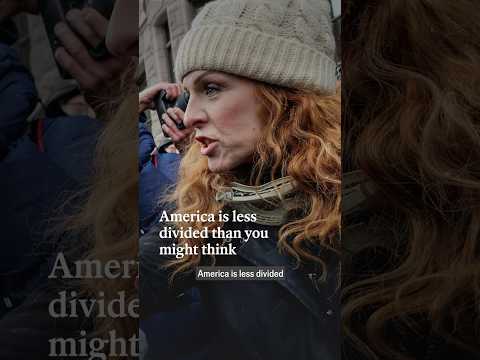
- Drawing on a 2026 road trip, the narrator claims personal interactions with diverse groups—ranging from “purple-haired anti-ICE activists” to “a Trump-loving sheriff”—demonstrate less social friction than often perceived online.
- The piece bolsters this optimistic framing with claims that life expectancy has returned to the highest level in American history and that after-tax income inequality is lower than a decade ago.
- The narrator asserts that the economy is performing “robustly” compared to other Western countries, though this comparative claim lacks documented benchmarks or specific economic data.
- The project is framed as an inquiry into the state of the American experiment, explicitly mirroring the nine-month 1830s journey taken by French aristocrat Alexis de Tocqueville before he authored Democracy in America.
- The claim that more than half of Americans view fellow citizens as morally bad is presented as a central tension, though the narrator provides no source, methodology, or specific polling reference for this figure.
The 1 Minute Signal Take
The video functions primarily as an impressionistic argument for a podcast rather than a rigorous sociological analysis. While the narrator’s calls for direct engagement are persuasive in tone, the sweeping claims about the economy and social cohesion lack evidentiary substantiation. Skip it; the summary provides the entirety of its anecdotal case and historical framing.
Time saved:
Back to Feed