
Strategic Significance
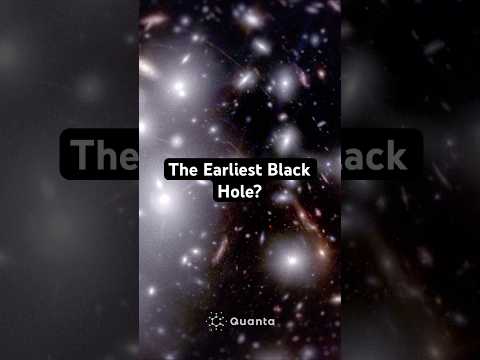
- This discovery represents a potential "anomaly-driven" shift in astrophysics. By questioning the chronological order of black hole and galaxy formation, it challenges the hierarchical assembly model that has dominated cosmology for decades. It forces a refinement of how we model the early universe's mass distribution.
Who Should Care
- Astrophysicists and cosmologists, specifically those working on galaxy evolution and supermassive black hole formation models, stand to gain the most from this. It also matters to those invested in the next generation of space observatories, as it justifies the resource allocation for JWST follow-ups and the LISA mission.
Contrarian Takeaway
- The absence of evidence is not the evidence of absence: the "missing galaxy" may not be a true structural anomaly, but rather a limitation of currently available telescopic sensitivity. The most "revolutionary" claims in the transcript may simply vanish once deeper exposure data corrects the observational bias.