
Back to Feed
Don't be a fool with a tool
The Signal
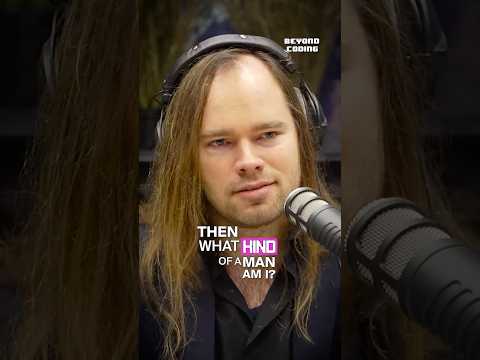
The speaker argues that the complexity of modern technology is largely performative, asserting that 90% of production artificial intelligence is essentially basic linear regression. He frames the decline of rote memorization as a shift in human value toward problem-solving and tool-assisted judgment, while questioning the ethics of possessing specialized skills without actively utilizing them to solve problems for others.
The Case
- The speaker claims that "90% of all the AI in production is still just linear regression," a quantitative assertion regarding current industry standards that remains unsupported by evidence and likely relies on rhetorical exaggeration.
- He argues that the value of human memorization is "only going down," framing this trend as a fundamental devaluation of internal knowledge in favor of external, tool-mediated problem-solving.
- Citing early-career advice, the speaker defines the primary reason for being hired as a client's inability to solve their own problem, using the heuristic: "If they understood the problem, they wouldn’t be hiring you."
- The speaker embeds his work philosophy in a moral framework, explicitly challenging himself—and by extension, the listener—that failing to apply one's skills to make a difference is a failure of character.
- He promotes a maxim for navigating automation, "Don’t be a fool with a tool," characterizing it as a baseline requirement for avoiding over-reliance on technology.
The 1 Minute Signal Take
This monologue functions as a brief, purely personal manifesto on professional ethics and modern technical reality. While the speaker's broad pronouncements on AI and the utility of memory are anecdotal and unverified, the core advice on professional independence and moral accountability provides a sharp, if subjective, compass. Skip it if you are looking for data or industry analysis; watch it only if you want a short, opinionated perspective on high-level career positioning.
Tags
Back to Feed