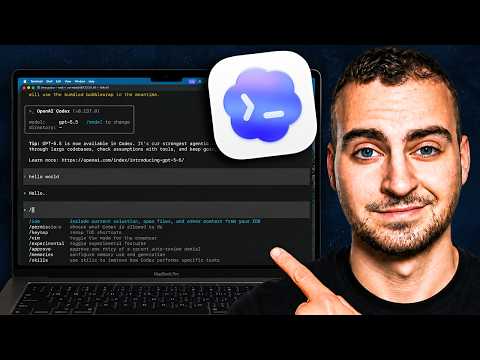
I Gave Codex a 24/7 Server. Now It Codes While I Sleep.
Jun 19, 202623m 57s video lengthTech With Tim
The Signal
This video demonstrates a workflow for maintaining persistent coding-agent sessions by moving operations from a local laptop to a cloud-hosted Virtual Private Server. The creator argues this setup prevents task loss from connectivity drops or sleep mode, though comparative claims regarding provider reliability and agent performance remain assertions without benchmark evidence.
The Case
Users can keep coding agents running indefinitely by running them inside a tmux session on a VPS, which allows the terminal to remain active after disconnecting via SSH.13:32
The creator uses a device-code authentication flow for the Codex CLI to leverage an existing ChatGPT subscription, which is presented as more cost-effective than using standalone API keys.8:01
GitHub access is managed through fine-grained personal access tokens, with an explicit warning that granting read-and-write permissions creates a risk of accidental repository deletion.9:15
An SSH client like Terminus enables the VPS to be managed from a mobile device, effectively turning the phone into a control surface for long-running remote agent tasks.16:09
Automation is achieved by linking cron jobs to the Codex exec command, allowing for recurring, non-interactive tasks like daily pull request reviews without manual prompting.20:16
The setup relies on a Hostinger KVM two plan, though the narrator’s claims about the provider being the most reliable on the market are promotional and unsupported by objective data.4:04
The 1 Minute Signal Take
This video is a functional, transparent walkthrough of a standard remote-devops pattern. It is worth watching for the specific practical demonstration of tmux-persisted agent sessions, though you should ignore the creator's subjective marketing of specific providers and agent rankings. Skip it if you are already comfortable with SSH and persistent terminal multiplexers.
Pro Analysis
Strategic Significance:
By decoupling the coding agent from the physical computer, engineers can transition from reactive, turn-based prom...