
Why It Matters
This case study highlights the shift from experimental 'chatbots' to 'AI product agents' that must reliably impact business outcomes. It demonstrates that the path to production-grade AI is less about model architecture and more about the maturity of the instrumentation and evaluation pipeline.
Strategic Implications
For enterprises, this signals that the 'build' phase is only the beginning. The competitive advantage lies in the 'operate' phase, where teams that can systematically turn real-world failure modes back into automated test cases (eval sets) will outpace those relying on manual debugging.
Evidence & Hype Audit
- Trustworthiness: Moderate. The speaker provides specific operational cadences and clear definitions of success.
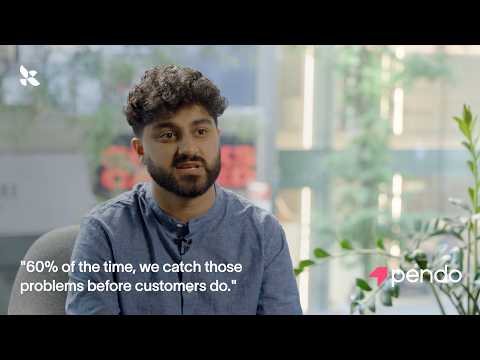
- Risk: Much of the reported impact—such as the '60% of the time' success rate and the scaling of design partners—is self-reported and lacks third-party verification. It should be treated as an organizational success story rather than a benchmarked statistic.
Counterarguments
Critics might argue that such heavy instrumentation and daily manual review represent an unsustainable 'human-in-the-loop' burden, which may be difficult to maintain as a product hits full-scale adoption. There is also the potential for 'over-tuning' to the specific traces of early partners, leading to brittle agents.
Role-Specific Takeaways
- Product Managers: Focus on defining successful outcomes (surface signal vs. suggest fix) rather than just interface features.
- Engineers: Prioritize building for observability at the agent level simultaneously with the initial product build.
What To Do Next
- Conduct an audit of your current agent's 'failure modes' to see if they are categorized clearly.
- Integrate trace-capture tools into your early POC environments.
- Establish a 'morning review' cadence for your most active production flows.
- Build a process to automatically convert new user queries into regression test cases.