Your Coding Agent Knows Your Code, But Not Your Actual App (Here's the Fix)

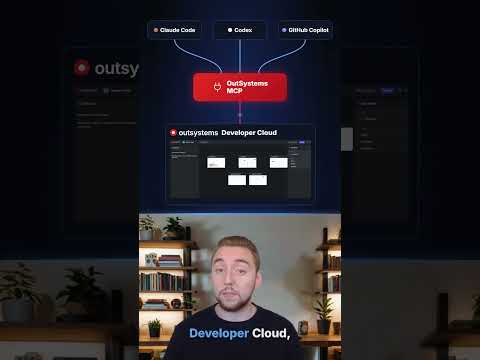
Video thumbnail: Your Coding Agent Knows Your Code, But Not Your Actual App (Here's the Fix)
Nov 6, 20261m 15s video lengthCole Medin

The Signal

OutSystems is positioning its new MCP (Model Context Protocol) integration as a solution for coding agents that struggle with runtime blind spots. By allowing agents to access platform-level data—such as dependencies, deployments, and logs—the company aims to move AI assistance from simple code generation toward full app-lifecycle management, while inheriting the developer's existing permission boundaries.

The Case

Core Value Proposition

  • Coding agents typically rely on repository files, which often omit critical operational context like deployment states or dependency graphs.0:00
  • The OutSystems MCP integration claims to provide a single interface where an agent can view the entire app, including its data model, logic, roles, and historical logs.0:16

Workflow and Capability

  • Agents perform a sequential workflow by first inspecting live metadata, mapping dependencies, and then handing build tasks to Mentor, the coding agent built into the OutSystems platform.
  • The integration supports post-deployment troubleshooting by allowing the same agent session to access logs and traces to diagnose failures.

Constraints and Access

  • The agent operates strictly within the user's current OutSystems permission set, ensuring it cannot perform actions for which the human developer is not authorized.0:55
  • OutSystems claims the integration is compatible with existing tools like GitHub Copilot, Cloud Code, and Codeex, with the feature enabled by default in the free Personal edition.

The 1 Minute Signal Take

This integration signals a shift toward platform-aware AI, where coding assistants are granted deeper observability to reduce the gap between code generation and runtime reality. While the workflow demonstrates potential for end-to-end debugging, prospective users should verify these capabilities against their specific app architecture and permission requirements.

Pro Analysis

Why It Matters

Developer productivity is currently plateauing as AI agents struggle to move from 'writing code' to 'maintaining systems.' The transition from source-only analysis to platform-aware reasoning is the necessary evolution to prevent agents from creating breaking changes in complex production environments.

Strategic Implications

This represents a shift toward 'platform-as-a-context-provider' for AI. By controlling the interface (MCP), the platform vendor dictates how the agent perceives the app, effectively centralizing the development ecosystem. This creates a moat where agents that have 'deep' platform integration will inevitably outperform those that only scrape repo-level code.

Evidence & Hype Audit

This is a feature-marketing demonstration. It makes strong, logical claims about integration but lacks independent verification or technical depth on how the underlying MCP protocol functions. It should be treated as a credible product capability demonstration rather than a proven industry standard.

Counterarguments

Critics might argue that deep platform-specific integration creates vendor lock-in. An agent that is 'too good' at navigating one proprietary platform will struggle to provide value in heterogeneous or multi-cloud environments, forcing developers to rely on the platform vendor's own specific tools.

Role-Specific Takeaways

  • Engineers: Use this to shorten the feedback loop between writing code and diagnosing deployment failures.
  • Tech Leads: Evaluate this as a potential replacement for siloed agent workflows that require manual verification.

What To Do Next

  • Connect your existing agent to the platform's MCP endpoint.
  • Run a diagnostic trace on a known broken build to see if the agent interprets the logs correctly.
  • Map your current app dependencies to verify if the agent's 'view' matches your architecture.
  • Check if your existing security protocols allow for third-party agents to act on your production data.

Share this

Tags

Written by: 1 Minute Signal Editorial Team