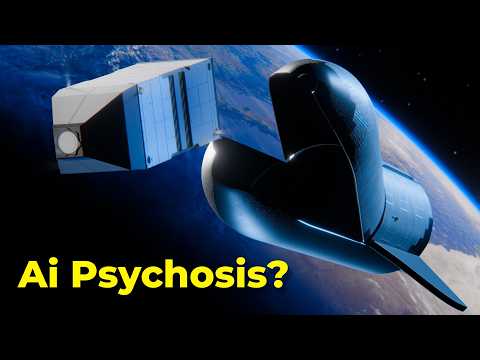
Starcloud, a firm that raised $170 million in March 2026, aims to build 5-gigawatt artificial intelligence data centers in orbit. Skeptics argue this project ignores fundamental physics, specifically the massive radiator size and launch costs required, suggesting military intelligence processing remains the only plausible, albeit limited, use case for orbital server farms.
The Case
The design for a 5-gigawatt orbital data center faces a severe thermal rejection bottleneck; because heat must be radiated in a vacuum, maintaining a 20°C operating temperature would necessitate a radiator 4 kilometers tall and nearly 1 kilometer wide.5:06
Starcloud’s own cited launch cost of "$30 per kilogram" appears wildly optimistic compared to known industry deals like the recent Voyager Technologies contract, which sits at $900 per kilogram.12:51
Massive structural and fluid-pumping requirements, such as a coolant circulation rate of 68,870 kg/s, create maintenance and stability risks that the company's white paper largely fails to address.5:47
Orbital fragility remains an unmitigated liability; with SpaceX reporting 300,000 collision avoidance manoeuvres for its Starlink network in 2025, a giant, monolithic space station would be a highly vulnerable target for radiation, debris, and atomic-oxygen degradation.8:27
Google’s "Suncatcher" concept, which uses pods of 81 smaller satellites in a sun-synchronous orbit, is presented as more technically grounded than Starcloud’s model but still suffers from coordination and orbital-congestion complexities.14:44
The most credible market for this technology is not consumer AI, but the rapid, low-latency processing of satellite imagery and synthetic-aperture-radar data for military intelligence, where speed in theater offers a decisive strategic advantage.17:27
The 1 Minute Signal Take
The presentation successfully deconstructs the "space AI" trend by contrasting breathless marketing claims against basic engineering constraints and hard launch economics. Skip it if you are already familiar with the thermal and orbital hurdles of space infrastructure, but watch it if you want the specific, brutal math that exposes why Starcloud’s current technical model is likely a fantasy.
Pro Analysis
Strategic Significance:
This content serves as a crucial reality check against the "hype cycle" of AI infrastructure. It demonstrates that...