
Why It Matters
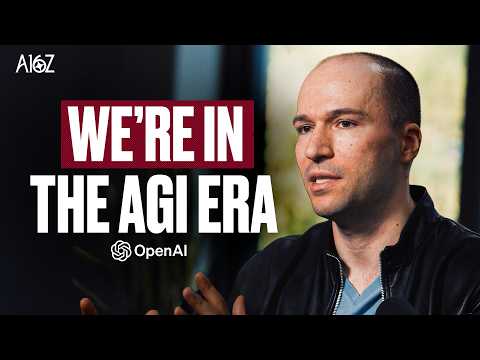
The transition described by Brockman marks the formal end of the 'AI as a chatbot' phase. By moving toward persistent, agentic, and multi-modal models, OpenAI is attempting to shift the utility of AI from 'content generation' to 'goal execution.' This has profound implications for how labor is structured and how digital security is maintained at scale.
Strategic Implications
OpenAI’s strategy is a move toward 'defensive capture.' By providing frontier tools to critical infrastructure, they aim to become the primary gatekeeper of security, creating a symbiotic relationship with national regulators. This effectively turns a potential liability (the risk of AI-enabled cyber attacks) into a moat (the necessity of OpenAI's defensive tools).
Evidence & Hype Audit
- Strengths: The move to 25% reallocation of engineering staff and the $1B defensive commitment are high-signal, verifiable actions. The Navier-Stokes example, while specific, suggests real-world agency.
- Weaknesses: The 'AGI' label remains highly subjective. The anecdote about Brockman’s website security, while successful, does not serve as a proof-of-concept for industrial-grade system security.
Counterarguments
Critics might argue that OpenAI is 'security washing.' By emphasizing the danger of AI-enabled offensive cyber threats, they justify the need for widespread adoption of their own proprietary defensive tools, potentially creating a cycle of dependency. Furthermore, relying on 10,000 agents for scientific discovery may be less efficient than optimized mathematical modeling in specific domains.
Who Should Care
- CISOs: You need a plan for AI-speed vulnerability remediation or you will be outpaced by automated adversaries.
- Infrastructure Operators: The window to participate in 'trusted access' programs for frontier models is opening now.
- Policy Makers: The debate around data centers is shifting from energy usage to 'national strategic infrastructure,' which changes the regulatory calculus.