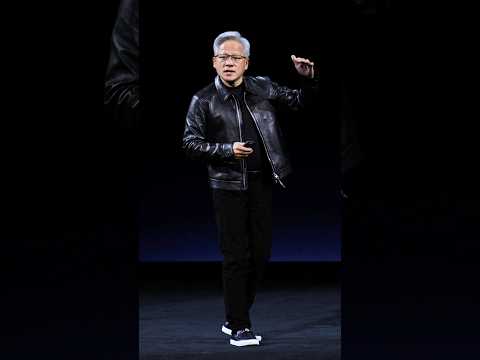
What the Jensen Huang Scandal Could Mean for Nvidia

Video thumbnail: What the Jensen Huang Scandal Could Mean for Nvidia
Nov 10, 20262m 18s video lengthThe Wall Street Journal

The Signal

Nvidia’s board has launched an independent investigation into CEO Jensen Wong regarding a personal association and potential national-security risks. This news breaks as the AI-chip leader faces a 20% share-price drop and intensified investor scrutiny of its model, creating a high-stakes convergence of governance failure and preexisting commercial doubt.

The Case

Governance and Risk

  • The board of Nvidia — a dominant chipmaker central to the global AI boom — has initiated an independent investigation into an undisclosed association between CEO Jensen Wong and a woman.1:47
  • The inquiry specifically evaluates whether this involvement creates national-security risks, a significant escalation that threatens to destabilize company leadership during a volatile period.

Business Model Scrutiny

  • Investor confidence is already strained by concerns over Nvidia’s financing-heavy sales strategy, which reportedly involves providing loans, investments, and backstops to ensure customers can purchase its hardware.0:57
  • Market skepticism regarding this model has intensified in recent months, contributing to a 20% decline in the company’s stock price over the last month.1:13

Strategic Constraints

  • Nvidia’s growth strategy remains heavily dependent on navigating government relationships to secure global market access, particularly in China.0:25
  • The company has been effectively blocked from the Chinese market for the better part of the last four to five years due to export restrictions intended to prevent the transfer of advanced technology to geopolitical rivals.

The 1 Minute Signal Take

Nvidia is currently caught in a feedback loop where governance uncertainty compounds existing skepticism about its aggressive financing model and geopolitical vulnerabilities. The independent investigation serves as a critical stress test: if it validates significant security concerns, the company risks a material loss of leadership stability and market support.

Pro Analysis

Strategic Implications

Nvidia’s current predicament illustrates a classic 'growth-at-any-cost' trap. By integrating financing into their sales model, the company has effectively blurred the line between a technology vendor and a venture firm, creating a high-beta dependency on its own customer base. The scandal now introduces a 'key person risk' at the worst possible moment—when the market is already recalibrating its expectations for the AI sector.

Evidence & Hype Audit

The content relies on market observation (stock price drops and investor chatter) rather than hard balance sheet data. While the report of the board investigation is a verifiable, high-signal fact, the link between the scandal and 'national security' is currently an assertion that has yet to be stress-tested by evidence or legal disclosure. The sentiment is bearish, reflecting current market anxiety rather than a comprehensive breakdown of the company's fundamentals.

Counterarguments

A contrarian view suggests that Nvidia’s moat—its technological advantage in AI compute—is so vast that leadership changes or governance issues are secondary. If the company continues to deliver dominant performance, the market may look past personal scandals, provided the core business model remains profitable without systemic financial risk.

Role-Specific Takeaways

  • Investors: Focus on the board's findings. Any evidence of actual security breaches will likely force a significant multiple contraction.
  • Competitors: Watch for shifts in customer financing terms; if Nvidia pulls back, market share in high-growth AI segments may suddenly become contestable.
  • Corporate Governance Professionals: This serves as a case study in how personal leadership conduct can become a material business risk when a company is too central to geopolitical interests.

What to do next

  • Audit exposure to high-beta, financing-dependent tech stocks.
  • Review board composition and disclosure protocols for your own high-tech holdings.
  • Watch for any SEC or regulatory filings that expand on the 'national security' claims mentioned in the investigation scope.
  • Evaluate the company’s dependency ratios: how much revenue is 'bought' via financing versus organic demand?

Share this

Tags

Written by: 1 Minute Signal Editorial Team