
The Capital Escalation Trap
This content shifts the focus of the AI 'bubble' debate from algorithmic viability to the underlying plumbing of the financial system. The primary insight is that AI has graduated from an engineering project to an asset-allocation challenge. The most significant implication is that the 'compute-as-infrastructure' narrative is not just marketing—it is a functional necessity for companies whose internal cash generation is no longer sufficient to maintain their competitive position.
Strategic Implications
-
The Infrastructure Hedge: Google’s pivot allows it to capture a toll from the entire industry. Even if Anthropic or OpenAI 'wins' the model war, Google wins the infrastructure war. This is a classic 'picks and shovels' strategy applied to a capital-intensive utility.
-
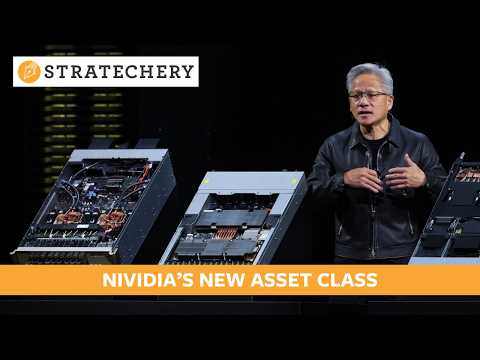
Financialization of Compute: Nvidia is trying to escape the cyclical nature of semiconductor sales by turning its chips into an 'infrastructure' asset class. This shifts the risk profile from high-tech growth to long-duration project finance, which brings a completely different (and potentially more stability-oriented) set of institutional investors.
Evidence & Hype Audit
The narrative is well-grounded in explicit financial data (bond issuance, free cash flow figures) and historical precedent. However, the tone regarding DeepMind’s 'frontier lab' status is heavily reliant on qualitative assessment from third-party analysts (SemiAnalysis) rather than raw performance metrics. The comparison to the 1873 Panic is a strong rhetorical device that should be treated as an analogy rather than a predictive certainty.
Counterarguments
- Productivity Offset: If AI truly delivers exponential productivity gains, the current debt load is trivial. In this view, we are not in a bubble, but in an 'under-leveraged' phase of the next industrial revolution.
- Risk Mitigation: Moving AI infrastructure to institutional investors (like pension funds) might actually be a prudent way to distribute the risk of early-stage technology development, preventing a single point of failure in the Big Tech balance sheets.
Who Should Care
- Investors: Watch bond issuance and spreads; they are the true pulse of the AI buildout.
- Cloud Architects: Understand that the shift to TPUs/Trainium is about cost and supply security as much as performance.
- Strategy Leads: Monitor the 'infrastructure-as-a-service' movement to see if your model investments are subsidizing your competitors' compute costs.
What to do next
- Track the spread on AI-related corporate debt to see if investors are beginning to demand a 'risk premium' on AI buildouts.
- Map the TPU-adoption curve specifically within Anthropic and Meta to confirm Google's 'platform' thesis.
- Monitor Nvidia's residual-value financing disclosures; if they begin to show default rates, the 'AI Factory' thesis is likely under stress.
- Watch for new equity issuances from the hyperscalers—this is the 'emergency brake' signaling that debt markets have tightened.