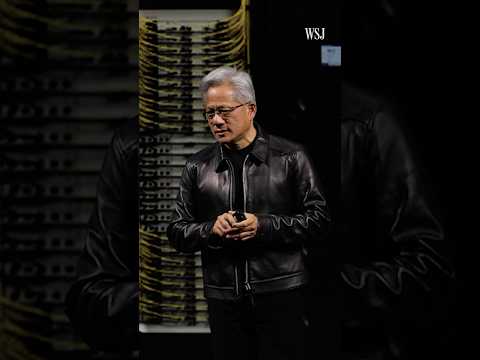
What’s Next for the AI Trade Amid Nvidia’s CEO Scandal?

Video thumbnail: What’s Next for the AI Trade Amid Nvidia’s CEO Scandal?
Nov 12, 20261m 35s video lengthThe Wall Street Journal

The Signal

Nvidia faces potential leadership upheaval following an unverified claim that it is preparing to oust long-time CEO Jensen Wong. As a $4 trillion company with a highly centralized, chairman-less management structure, any leadership instability threatens to rattle both the broader AI trade and the intricate, entrenched supply chains that rely on Nvidia’s chips.

The Case

  • Nvidia operates with an unusually flat governance structure where dozens of direct reports answer to Wong, which analysts argue makes the company uniquely sensitive to leadership transitions.0:28
  • Market reaction to the uncertainty is already visible, with Nvidia shares down approximately 15% this month and experiencing further declines in after-hours trading.
  • Despite leadership concerns, demand for Nvidia’s AI chips is expected to remain resilient in the near term because hyperscale computing giants currently have no viable alternative to what is considered the industry's gold standard.
  • Longer-term competitive pressure may intensify, as market participants could view this uncertainty as an opportunity to accelerate the adoption of alternative chip ecosystems.0:57
  • Investors are closely watching policy levers, specifically whether strengthened export controls could inadvertently benefit U.S. buyers by redirecting the supply of Nvidia chips away from foreign markets.1:14

The 1 Minute Signal Take

While the prospect of an ouster remains an unsubstantiated claim, the market is already pricing in systemic risk due to the company's extreme centralization around one leader. Investors should distinguish between the immediate necessity of Nvidia’s current hardware and the gathering medium-term momentum of rival chip strategies.

Pro Analysis

Why It Matters

Nvidia is a keystone entity in the global AI economy. When a company with a $4T market cap and a highly centralized, 'founder-centric' structure hits a leadership speed bump, the tremors are felt across the entire tech sector. This situation serves as a stress test for AI-driven equity markets.

Strategic Implications

For investors, the primary concern is the fragility of a one-man-led monolith. Strategically, this forces a re-evaluation of 'key-person risk' in other AI-adjacent firms. If the market loses confidence in Nvidia’s continuity, the ripple effect will likely hit smaller suppliers who lack the balance-sheet cushion of the hyperscalers.

Evidence & Hype Audit

The content relies heavily on the assertion of an impending ouster without citing concrete board meeting minutes or official leaks. It is an exercise in 'uncertainty pricing' rather than a report on a resolved event. The financial metrics (15% drop, $4T cap) are factual, but the narrative regarding the ouster is speculative.

Counterarguments

One could argue that Nvidia’s 'gold standard' status and the sheer inertia of the AI build-out cycle render leadership changes irrelevant in the near-term. Hyperscalers are locked into CUDA and Nvidia's roadmap; switching costs are high enough that internal management dramas may have negligible impact on revenue for several quarters.

Role-Specific Takeaways

  • Investors: Hedge against volatility in semiconductor supplier stocks.
  • Hardware Engineers: Closely monitor the stability of the developer ecosystem/roadmap.
  • Policy Analysts: Watch for regulatory updates on export controls as a potential supply-side shift.

What to do next

  • Monitor official SEC filings for any changes in board governance.
  • Track the spread between Nvidia and its direct hardware competitors.
  • Evaluate exposure to Tier-2 suppliers vulnerable to Nvidia's production cycles.
  • Assess the impact of potential policy shifts on domestic vs. international chip allocation.

Share this

Tags

Written by: 1 Minute Signal Editorial Team