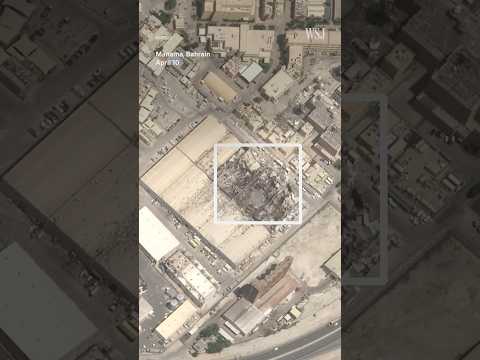
How We Revealed Costs of Damage from Iranian Strikes at a U.S. Base

Video thumbnail: How We Revealed Costs of Damage from Iranian Strikes at a U.S. Base
Jun 27, 20262m 27s video lengthThe Wall Street Journal

The Signal

Reporters have independently estimated approximately $400 million in damages to NSA Bahrain, a primary naval facility in the Middle East, following repeated strikes between February and June. While the Pentagon maintains that operations were not significantly impacted and no personnel were killed, officials have refused to disclose official cost assessments for the damage. A clear tension exists between the military's characterization of minimal operational disruption and the extent of reconstructive efforts now being considered for the base.

The Case

  • Reporters arrived at a $400 million damage estimate by cross-referencing satellite imagery and social media with procurement data from the U.S. Army Corps of Engineers and the 2026 Department of Defense facilities pricing guide.0:33
  • An analysis of one specific warehouse complex identified three destroyed bays, with construction costs for those sections alone estimated at approximately $34 million.1:06
  • The $400 million figure is explicitly limited to construction costs, meaning the total financial impact is likely higher because the estimate excludes debris removal, building reinforcement, and the replacement of contents.1:42
  • Although the military claims operations were unaffected, admitting only that most personnel were evacuated while leaving a skeleton staff, the Department of Defense is now internally evaluating whether to revamp the Bahrain site or rethink its footprint elsewhere in the region.
  • The reporters' methodology is robust for an estimation but remains an assertion rather than an audited accounting, and the military’s claim of no operational impact remains a self-serving statement that cannot be independently verified through the provided data.

The 1 Minute Signal Take

The reporting succeeds in providing a concrete, ground-up estimate to fill a vacuum created by the Pentagon's non-disclosure. The methodology is credible enough to highlight the discrepancy between the military's 'business as usual' narrative and the reality of the physical destruction. Watch the video if you want to see the visual evidence of the damage; otherwise, the summary provides the full substance of the report.

Pro Analysis

Strategic Significance

This report demonstrates how open-source intelligence (OSINT) techniques can effectively bypass government narrative control to establish the physical realities of conflict. It reframes the debate from vague claims of 'no operational impact' to concrete, replicable financial data.

Who Should Care

  • Defense Contractors and Investors: Changes in base infrastructure and regional footprint suggest upcoming shifts in logistical procurement.
  • Geopolitical Strategists: The vulnerability of a primary 'anchor' base suggests a potential pivot away from static, concentrated regional positions.
  • Taxpayers: This creates an accountability baseline for war-related spending that would otherwise remain opaque.

Contrarian Takeaway

The military's claim that operations were not 'significantly impacted' may be technically true if current mission requirements were downgraded, but the $400 million price tag confirms that the 'operational cost' of maintaining the current regional posture has become economically unsustainable, regardless of whether a single base functioned.

Time saved:3s

Share this