
Back to Feed
Iran's Green Movement generation
The Signal
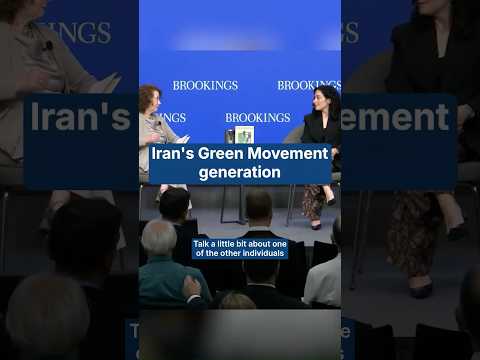
The Green Movement, often viewed in the West as a spontaneous eruption of public dissent, was actually anchored by deep-rooted civil society networks formed in the late 1990s. Participant Hila Sedighi serves as a window into this generational cohort: young reformers who sought to change the Islamic Republic from within, rather than overthrow it, by dialing down theocratic influence through organized, grassroots-level activism.
The Case
- Hila Sedighi, an Iranian poet and activist too young to have experienced the 1979 revolution, describes her generation as having been politically molded by the reform era of the late 1990s and early 2000s.
- These activists built high-density personal networks—characterized by regular house visits and shared journals—which the narrator claims evolved into the essential infrastructure for mobilizing the Green Movement.
- Sedighi emerged as a symbolic figure during the movement when she publicly recited a poem referencing prison rapes and killings at a time when she was semi-in-hiding and most of her friends had been arrested.
- The narrator asserts that while Western observers often characterize the Green Movement as a spontaneous surge, it was instead the predictable activation of a decade of democratic training and community building.
- Following her public dissent, Sedighi faced judicial cases and eventually left Iran, transitioning from an activist within the system to a symbol of its repression.
The 1 Minute Signal Take
The video offers a compelling argument that the legitimacy of political movements often outlives their immediate success by building durable social capital, rather than just raw emotion. It is worth watching for the specific, granular details about how individual activists formed networks, though the claims regarding the movement's 'spontaneity' are presented as the speaker's interpretation rather than objective, audited fact.
Time saved:
Tags
Back to Feed