
Tag: Neanderthals
Why Neanderthals Might Be Our Cousins After All - David Reich
The Signal
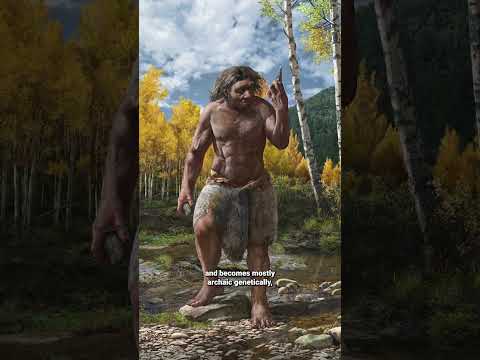
A speculative evolutionary model proposes that a single ancestral population invented the Middle Stone Age and Middle Paleolithic 200,000–300,000 years ago, dispersing to both Europe and Africa. The creator hypothesizes that this group remained culturally modern yet underwent different genetic fates, potentially explaining Neanderthals as a culturally continuous, though genetically distinctive, offshoot.
The Case
- The model claims a primary ancestral group expanded in multiple directions, seeding both Neanderthals in Europe and the ancestors of all living humans in Africa through one key revolutionary event.
- In Europe, the theory posits that this population mixed with local archaic humans—facing roughly 95% genetic replacement—but retained its core cultural features and stone-tool technology.
- The narrator frames Neanderthals as potentially being "our cousins" who share our Y chromosome, mitochondrial DNA, and formative events, though this remains an unproven hypothesis.
- Central to the argument is the claim that cultural identity can persist despite significant genetic turnover, challenging the assumption that archaeological records of modern behavior must map directly to the same lineage.
The 1 Minute Signal Take
The narrator builds a provocative framework for human evolution, but offers it as an interpretive model rather than an empirically demonstrated history. Skip it; the summary captures the entirety of the hypothesis, and the video provides no additional evidence or technical validation to elevate these speculations into settled findings.
Time saved:
Tags
Tag: Neanderthals