
Why It Matters
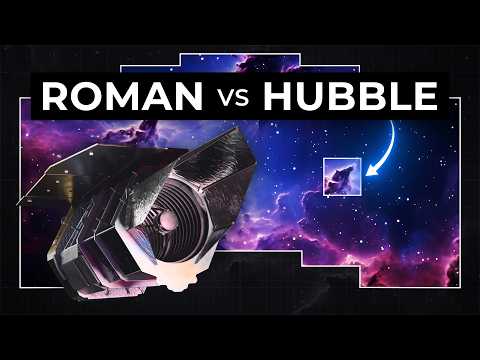
The Roman Space Telescope represents a paradigm shift from 'boutique' science—where observatories target specific, high-interest objects—to 'survey' science, where the observatory treats the entire sky as an input signal to be processed. This is essential for understanding the distribution of dark matter and the true frequency of planetary formation.
Strategic Implications
By moving the burden of discovery from hardware sensitivity to data processing, NASA is effectively inviting the global research community to participate in citizen-science discovery. The reliance on SQL, Python, and API-based access suggests that future breakthroughs will be found by data analysts as much as by astrophysicists.
Evidence & Hype Audit
The content leans heavily on predictive modeling. While the hardware specifications are settled facts, the specific counts of rogue planets and exoplanets are projections. The 'revolution' narrative is strong, but actual impact is gated by the successful operation of the coronagraph and the processing of the massive, 20,000-terabyte dataset.
Counterarguments
Critics might argue that the complexity of the coronagraph system introduces a single point of failure for an instrument that is effectively a 'technology demo.' If the active optical correction (the 20 Hz piezoelectric cycle) fails, a major pillar of the mission's future-facing scientific value would be severely compromised.
Who Should Care
- Astrophysicists: For the new gravitational lensing data and exoplanet counts.
- Data Scientists: For the upcoming massive open-access datasets.
- Mission Architects: For the L2 orbital station-keeping techniques.
What To Do Next
- Monitor the upcoming launch schedule for the Falcon Heavy deployment.
- Review the open-source data-analysis tools being developed for Roman’s datasets.
- Study current microlensing survey methodologies to prepare for the massive influx of raw event data.
- Track the progress of HWO (Habitable Worlds Observatory) to understand how Roman’s coronagraph findings will influence 2040-era designs.