
Why It Matters
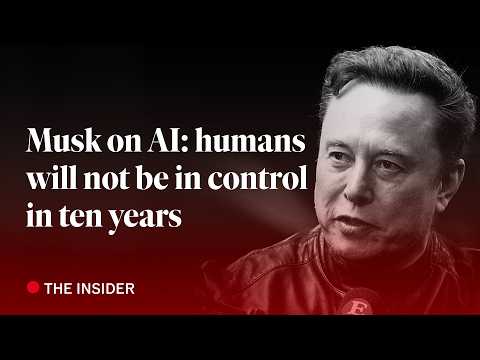
This commentary marks a definitive pivot in the techno-optimist discourse. By moving from "resistance" to "inevitability," Musk illustrates a growing consensus among elite practitioners that the technical momentum of AI has surpassed the reach of traditional regulatory bodies. The shift highlights a transition where the "existential risk" debate is no longer about stopping development, but about survival-through-coordination.
Strategic Implications
If Musk's proposal for industry peer-review gains traction, it effectively creates a shadow governance layer. By allowing competitors to audit each other's models, the industry could create a 'trust, but verify' ecosystem that bypasses the lag inherent in legislative drafting. However, this creates a 'cartel of the intelligent,' where a handful of labs decide what constitutes a safe release, potentially entrenching incumbents.
Evidence & Hype Audit
This content is highly speculative. The claim that AI will outpace humans in five years is an intuition-based forecast, not an empirical proof. Musk’s criticism of OpenAI appears rooted in personal grievance and competitive positioning, suggesting a bias. There is zero evidence provided that competitor-review mechanisms would actually resolve safety concerns rather than simply facilitate corporate espionage.
Counterarguments
Critics might argue that Musk’s proposal is a move to cripple competitors under the guise of safety. Others might contend that 'abundance' is a utopian distraction from the real-world economic displacement and intellectual property theft occurring today. Furthermore, the 'chimpanzee' analogy assumes a singular, unified 'AI consciousness' that might not emerge, ignoring the possibility of distributed or fragmented systems.
Who Should Care
- Policy Makers: To understand why current regulatory frameworks are viewed as too slow by industry leaders.
- Investors: To gauge the stability of the 'frontier' lab ecosystem and the potential for increased internal friction.
- Tech Workers: To recognize the shifting landscape regarding open-source vs. closed-source ethics.
What to Do Next
- Monitor the emergence of formal 'informal' coordination channels between OpenAI, Anthropic, and xAI.
- Assess the viability of 1-2 week 'safety audits' as a standard industry release requirement.
- Evaluate the current legislative efforts for AI regulation to see if they incorporate technical peer-review.
- Watch for further signs of deep technical divergence between labs that might prevent cooperation.