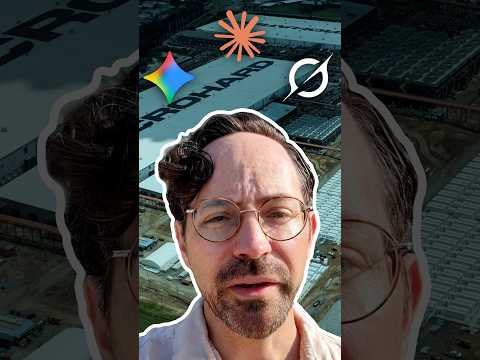
What I Saw Outside Elon Musk’s Massive Colossus 2 Data Center | WSJ

Video thumbnail: What I Saw Outside Elon Musk’s Massive Colossus 2 Data Center | WSJ
Oct 24, 20263m video lengthThe Wall Street Journal

The Signal

Colossus 2, a massive AI data center complex in Memphis completed in 2026, has become the centerpiece of Elon Musk’s AI infrastructure. While the site is rapidly scaling to support major models like Grok, Claude, and Gemini, it faces intense local opposition over noise and air quality, escalating into litigation that the federal government is now attempting to halt on national-security grounds.

The Case

Scaling and Infrastructure

  • Colossus 2 is part of a rapidly expanding complex that SpaceX — the aerospace manufacturer led by Elon Musk — describes as the world’s largest AI supercomputer, with future projections suggesting it could house up to a million GPUs.0:05
  • To support this growth, the facility currently operates nearly 60 temporary natural gas turbines producing over half a gigawatt of power at peak, though the company plans to transition to a dedicated power plant under construction next door.

Local Conflict and Litigation

  • Residents and the Safe and Sound Coalition — a local activist group headed by Shannon Samsa — have filed multiple lawsuits alleging that the facility’s persistent 24/7 noise and potential air pollution are causing significant harm.1:36
  • SpaceX disputes these claims, asserting that it utilizes advanced emissions controls and that previous studies of its nearby Colossus 1 facility showed no impact on local air quality.2:10

Federal Intervention

  • The Department of Justice has moved to dismiss one of the ongoing environmental lawsuits, arguing that the data center is critical to national security.2:32
  • While Musk claimed in August that these sites generate more revenue than all other company sources combined, this assertion remains unverified and lacks supporting financial evidence in public records.

The 1 Minute Signal Take

The conflict over Colossus 2 highlights the friction between the industrial-scale electricity and land-use demands of modern AI infrastructure and the local communities living in its shadow. As the federal government increasingly frames these facilities as national-security assets, the outcome of current litigation will likely set a major precedent for how AI infrastructure is regulated versus protected.

Pro Analysis

Why It Matters

The expansion of massive AI data centers like Colossus 2 is no longer just a private business decision; it has become an infrastructure and regulatory challenge. When AI companies begin to exert pressure on local power grids and generate significant noise, they transform from quiet corporate neighbors into central subjects of local and federal political friction.

Strategic Implications

We are witnessing the emergence of 'strategic infrastructure' status for AI facilities. By framing data centers as critical to national security, companies may gain the ability to preempt local laws, which creates a dangerous precedent for future urban and rural development. If judicial immunity for AI compute holds, local communities will have little recourse against the externalities of the global AI supply chain.

Evidence & Hype Audit

The claims provided in the transcript, particularly regarding revenue and model hosting, are speculative and largely lack external verification. The narrative relies heavily on the 'world’s biggest' framing, which functions as promotional signaling rather than technical analysis. The most reliable data points are the concrete physical observations—the turbines, the security, and the existence of the lawsuits.

Counterarguments

One could argue that the noise and pollution are temporary transition costs that are significantly outweighed by the strategic necessity of maintaining AI leadership. Without massive centers like Colossus 2, the argument goes, domestic firms risk falling behind, and the economic benefits of AI infrastructure justify minor environmental tradeoffs.

Who Should Care

  • Policy Makers: Must define whether 'data center' is a protected status under national security legislation.
  • Investors: Need to look past the 'digital landlord' hype and quantify the legal and operational risks of potential community-led shutdowns.
  • Local Residents: Should push for independent, continuous environmental monitoring instead of relying on company-funded studies.

What To Do Next

  • Audit the actual energy efficiency of the temporary turbines vs. grid power alternatives.
  • Monitor for future legislative attempts to codify data center sites as 'critical infrastructure' at the state level.
  • Seek third-party verification for claims that major LLMs are offloading training workloads to third-party providers like SpaceX.
  • Evaluate the long-term viability of the 'digital landlord' model in regions with strict power and noise regulations.

Share this

Tags

Written by: 1 Minute Signal Editorial Team