
Why it matters
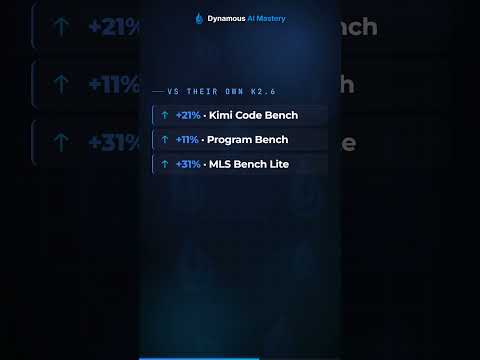
This release signals a aggressive effort by Moonshot to capture the developer market by offering open-weights alternatives that compete directly with closed-source incumbents. It challenges the assumption that only massive closed models can provide elite-tier coding proficiency.
Strategic implications
If Kimi K 2.7 proves effective in real-world environments, it incentivizes developers to move away from paid proprietary APIs. Lower reasoning token usage directly translates to lower operational costs, which is highly advantageous for companies running large-scale or automated coding agents.
Evidence & Hype Audit
The content relies heavily on internal, self-reported benchmark metrics without disclosing the underlying methodology or providing independent verification. Take the efficiency claims as an engineering goal statement rather than a validated performance guarantee.
Counterarguments
Critics may point out that benchmarks, especially narrow coding benchmarks, often favor the developer's own models. Furthermore, without a mature ecosystem of third-party integrations similar to what exists for GPT or Claude, the 'migration cost' for professional development teams might outweigh the marginal performance or cost benefits.
Action Items
- Benchmark against your current workflow using your own unit test suites.
- Monitor GitHub or developer forums for third-party verification of the 30% reasoning-token reduction.
- Integrate the model into a local CLI environment to test compatibility with existing project structures.
- Prepare to re-evaluate infrastructure if the promised 'six-time' speed mode materializes, as it could alter the compute/performance trade-off entirely.