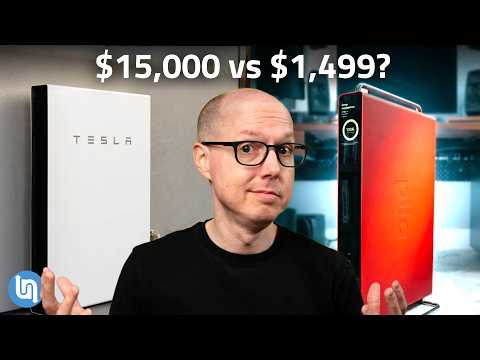
Can a $1,500 Battery Replace a Powerwall?

Video thumbnail: Can a $1,500 Battery Replace a Powerwall?
Jun 23, 202619m 15s video lengthUndecided with Matt Ferrell

The Signal

Pila is a new category of modular, plug-in home batteries designed to coordinate over a local thread network, offering an alternative to traditional, fixed, high-cost whole-home systems. Matt Ferrell, a reviewer and Pila advisor, presents the technology as a solution for renters, apartment dwellers, and code-constrained homeowners. While Pila enables distributed backup and load shifting today, a central tension exists: the product's full potential as a 'mini virtual power plant' capable of pushing power back into home outlets is currently illegal and not code-compliant in the US.

The Case

  • Pila units offer portable, room-level power with 1.6 kWh of storage per device—a modular approach Matt compares to mesh Wi-Fi rather than the single-box architecture of existing, multi-thousand-dollar systems like Tesla Powerwall.4:42
  • The hardware is capable of bidirectional outlet export, but Matt explicitly acknowledges this is illegal and not compliant with current US building codes; developers are waiting on potential regulatory shifts and the adoption of the UL 3700 safety standard.5:54
  • Matt used three Pila units in his own home to close a ~5 kWh capacity gap that remained unfilled due to local garage sprinkler-code constraints that would have made a larger, centralized system prohibitively expensive.10:36
  • The system excels at distributed backup for specific, plugged-in devices; in Matt’s house, it extended network rack backup from 10 minutes to over 5 hours and helped shift evening load off his main Enphase batteries.12:15
  • Pila does not replace a whole-home backup system; it cannot power heavy loads like a central HVAC heat pump or a Level 2 EV charger, and is priced at $1,499 per unit.15:24
  • Matt’s technical claims regarding his own power usage are internally consistent, but he acknowledges his status as an advisor and flags broader claims—such as the number of states considering plug-in storage legislation—as lacking specific cited evidence.0:47

The 1 Minute Signal Take

This is a practical look at filling small, specific energy gaps, though the product’s broader promise rests entirely on pending regulatory changes that may or may not materialize. Watch it if you are a homeowner or renter struggling with specific power needs and want to see the system’s performance in a real-world lab setting; skip it if you just want a surface-level summary of the tech.

Pro Analysis

Strategic Significance

This represents a shift toward the 'consumerization' of grid infrastructure. By treating energy storage as a modular peripheral—much like mesh Wi-Fi—the industry is moving away from bespoke, contractor-heavy installations toward plug-and-play distributed systems. This decentralization increases grid resilience in a way that centralized, large-scale battery plants cannot.

Who Should Care

Renters, apartment inhabitants, and homeowners with limited electrical infrastructure will benefit most, as they gain access to a market previously barred to them. Utility companies and grid operators should also watch this closely, as the potential future integration of these units into virtual power plants could transform millions of wall outlets into active grid-stabilization nodes.

Contrarian Takeaway

The fact that these devices are currently not code-compliant for grid export is actually a feature of their safety rather than a design flaw; the strict regulation prevents an influx of dangerous, non-standard back-feeding electronics from compromising home electrical circuitry.

Time saved:16m 34s

Share this