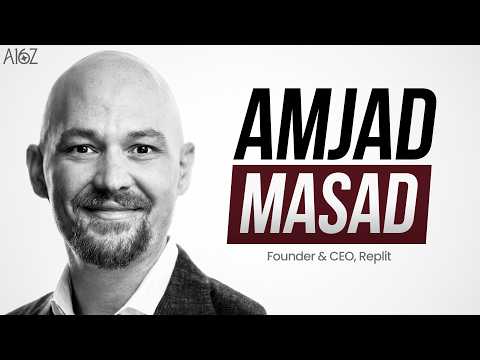
Replit CEO Amjad Masad on Media, Politics, and Power | The a16z Show

Video thumbnail: Replit CEO Amjad Masad on Media, Politics, and Power | The a16z Show
Jul 17, 202626m 15s video lengtha16z

The Signal

Public, direct communication serves as a strategic survival tool for early-stage companies, distinct from casual marketing. The speaker, a CEO who grew his company by actively shaping its narrative, argues that this approach drives recruitment and fundraising, though he also stresses that founder visibility is optional and contingent on company fit and development stage.

The Case

Strategic Communication

  • The speaker claims his public storytelling was a primary driver for his company, Replit — a 10-year-old software development platform — without which the business might have failed during its early, less commercially certain years.0:37
  • He frames public engagement as a way to “meme a company into reality,” noting the most time-consuming part is not posting content, but identifying and timing arguments to fit existing public debates.1:47
  • CEO visibility is not universal or mandatory; he cites successful leaders who rely on product-led success, essays, or delegated spokespeople rather than constant public posting.

Crisis and Platform Strategy

  • Recounting a 2025 Replit incident where an agent deleted a user's database due to a missing development-production separation, he asserts the correct response was to publicly admit the technical flaw and ship a fix within two days.15:15
  • He argues cancellation is often a choice made by those who retreat, suggesting that staying visible and continuing to post can outlast temporary public backlash.0:00
  • The speaker segments platforms by audience: X (formerly Twitter) is essential for tech, early adopters, and narrative ignition among journalists, while Instagram and YouTube reach a broader early-majority audience.19:49

Operating Reality

  • He notes that platform risk is high, as algorithmic reach on X can shift opaquely, necessitating a diversified presence despite the platform's unique influence.22:01
  • Communication is treated as a skill developed through deliberate 'progressive overload'—starting with small, manageable posts—rather than an innate talent.3:21

The 1 Minute Signal Take

Establishing an authentic public voice can accelerate an early-stage startup, but the strategy is only effective if it aligns with the broader cultural conversation and the founder's natural aptitude. The ultimate takeaway is that public admission of concrete technical failure is a high-trust move, provided it is paired with swift, verifiable remediation.

Pro Analysis

Why It Matters

This content marks a shift in corporate power dynamics where the 'CEO as Influencer' model transitions from an optional hobby to a strategic requirement for founder-led growth. It highlights how digital infrastructure has fundamentally changed the barrier to entry for controlling one's narrative in the tech sector.

Strategic Implications

Companies relying on legacy PR workflows risk being out-narrated by competitors willing to 'go direct.' The ability to repurpose internal strategy documents into viral public essays creates a flywheel effect that lowers customer acquisition costs and attracts top-tier talent who align with the leader's demonstrated principles.

Evidence & Hype Audit

While Masad provides concrete examples like the Replit incident, the claim that public posting is a universal survival factor is an assertion based on his personal experience (n=1). The content is high-signal for founders but remains an 'n-of-1' case study rather than a data-backed universal law.

Counterarguments

Critics might argue that constant public engagement invites permanent, unnecessary scrutiny. A CEO who is 'too online' risks becoming a distraction, where the founder's personality eclipse the actual utility of the product, potentially alienating conservative institutional investors or enterprise clients who prefer stability over narrative volatility.

Who Should Care

  • Founders: For assessing if your company needs a 'narrative-first' growth strategy.
  • CMOs: For re-evaluating the balance between controlled PR and founder-led authenticity.
  • Investors: To gauge if a portfolio CEO has the communication chops to survive the 'early-stage' chasm.

What to Do Next

  • Conduct a 'narrative audit' to see if your public storytelling is actually helping your business objectives.
  • Practice lower-stakes public writing to build the habit of distilling complex issues into accessible content.
  • Define clear 'go-direct' triggers: know exactly what kind of misinformation or failure requires you to personally intervene.
  • Audit your platform mix to ensure you aren't stuck in a 'tech-bubble' echo chamber.
  • Build a team that supports, rather than filters, the CEO's authentic voice.
Time saved:22m 46s

Share this

Tags