
Why It Matters
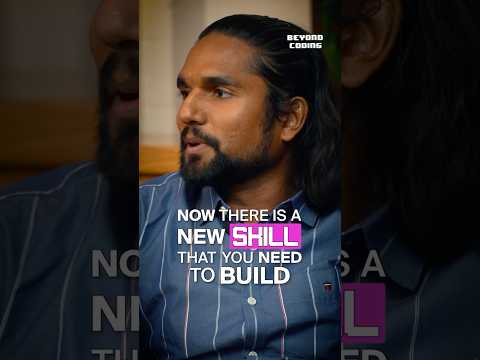
This content serves as a reality check for senior engineers who may feel that the rise of AI tooling threatens their professional relevance. By centering the conversation on human-centric skills like ownership and influence, it redefines the 'staff engineer' archetype as a role defined by agency rather than output volume.
Strategic Implications
For individual contributors, the takeaway is clear: efficiency is a commodity. The strategic value of an engineer lies in their ability to act as a bridge between ambiguous business needs and complex technical solutions. This necessitates a shift in focus from mastering new frameworks to refining interpersonal influence and strategic prioritization.
Evidence & Hype Audit
The content relies entirely on the speaker’s anecdotal authority as a Meta staff engineer. It lacks empirical data or specific case studies, making it more of a 'professional philosophy' than a research-backed guide. It is not necessarily 'hype'—it is grounded in standard career progression patterns—but it remains subjective.
Counterarguments
One could argue that the overlap between staff engineers and engineering managers is a symptom of organizational bureaucracy rather than a natural law of engineering excellence. Additionally, the insistence that human influence cannot be replaced by AI may be premature, as autonomous agents increasingly take over tasks previously requiring high levels of human coordination.
Who Should Care
- Senior Engineers: Looking to transition to staff or principal roles.
- Engineering Managers: Seeking to understand how to better align with senior ICs.
- Technical Leaders: Evaluating their team’s growth and development strategy in light of AI integration.
What to do next
- Evaluate your current project's alignment with your long-term intellectual interests.
- Actively seek opportunities to exert influence beyond your immediate codebase.
- Develop a framework for identifying which problems are worth solving, rather than simply working through a backlog.
- Bridge the gap between your role and management by observing where your daily behaviors overlap with leadership tasks.
- Reflect on which core professional skills feel 'static' vs. 'evolving' given current AI capabilities.