
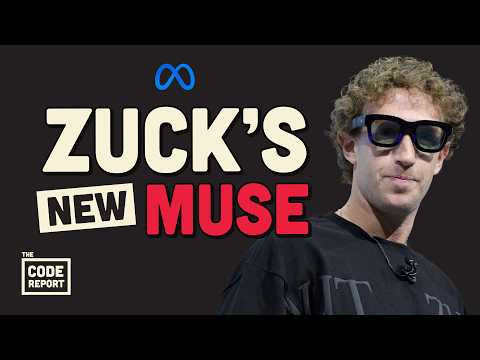
Why It Matters
Meta's oscillation between 'open' and 'closed' strategies reflects the chaotic tension currently defining the AI industry. The release of Muse Glimmer proves that even 'closed' giants must periodically offer open crumbs to the community to maintain influence, set standards, and pressure competitors who are hoarding their own closed models.
Strategic Implications
By open-sourcing a distilled version of their proprietary stack, Meta is effectively outsourcing the optimization and stress-testing of their architecture. This allows them to iterate on their internal models while letting the open-source community do the heavy lifting of finding edge cases and practical applications.
Evidence & Hype Audit
This content is highly biased toward a narrative of corporate cynicism. While the technical claims—such as the memory requirements and the distillation origin—appear grounded in Meta’s public release notes, the speaker's claims regarding 'secret juiced up benchmarks' and 'redemption arcs' are unsupported conjecture. The technical performance claims should be treated as 'optimistic' until verified by third-party reproducibility.
Counterarguments
Critics might argue that even a 'derivative' open-source model is objectively superior to a completely inaccessible black box. Furthermore, if Meta’s manifesto forces a legitimate conversation about the dangers of extreme ownership concentration, the strategic motive behind the message may matter less than the policy outcomes it generates.
Role-Specific Takeaways
- Developers: Use Muse Glimmer as a lightweight, local alternative for coding tasks, but account for its susceptibility to prompt injection.
- Policy Analysts: Observe the proposed $1 billion data center fund as a template for future 'social license to operate' efforts by big tech.
- Infrastructure Leads: Recognize that 4-bit quantization and speculative decoding are now standard requirements for local deployment of 30B+ parameter models.
What To Do Next
- Verify the memory usage on your local hardware before committing to an architecture.
- Audit the 28% injection success rate against your specific safety-critical use cases.
- Compare Muse Glimmer's output quality against Qwen 3.6 for your specific domain.
- Plan for the integration of Muse Spark 1.2 into existing workflows if/when the open weights become available.