
Why It Matters
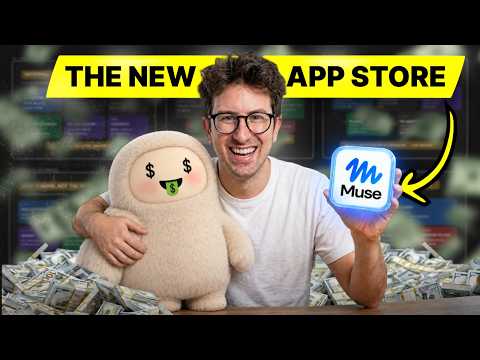
Meta’s transition to an agentic interface represents a shift from AI as a content generator to AI as a service executor. By allowing third-party API integration, Meta is creating an 'intent-based' economy where the competition is not just about having the best model, but about being the first 'hook' that Muse calls when a user expresses a commercial need.
Strategic Implications
Businesses that have existing API infrastructure for booking, scheduling, or lead management are at a massive advantage. These companies do not need to invent new technology; they simply need to wrap their existing capabilities into a standard MCP (Model Context Protocol) format. For startups, the opportunity lies in filling the 'long tail' of specific local services that major platforms currently ignore.
Evidence & Hype Audit
This content is highly speculative. The 'app store moment' analogy is a common Silicon Valley frame used to generate excitement, and the speaker admits that 'we still need evidence' for critical growth drivers like discovery. The claims rely on anecdotes (e.g., Duffel's transaction volume) rather than independent data. The technical advice is practical, but the market-size projections should be viewed as unverified forecasts.
Counterarguments
Critics might argue that agentic discovery will never be organic. Users may prefer the consistency of a few 'walled garden' providers chosen by Meta to prevent poor experiences. Furthermore, if the connector directory becomes cluttered, user trust—and therefore usage—could collapse, leading Meta to tighten restrictions rather than open them.
Who Should Care
- SaaS Founders: To evaluate if their existing API-based service can be mapped to a Muse connector.
- Marketplace Operators: To determine if their inventory should be exposed via these agents to capture demand.
- Individual Developers: For low-cost testing of new 'micro-business' ideas in local service niches.
What To Do Next
- Review current Meta documentation to distinguish between custom connector submission and MCP server integration.
- Select one narrow, high-friction task (e.g., scheduling a specific repair) to build an end-to-end prototype.
- Use a coding agent to build the basic availability-check and booking flow.
- Manually test conflict scenarios like booking a time that just expired.
- Secure an initial partnership with one local supplier or creator for beta testing.
- Monitor Meta's directory for competitor patterns and recurring editorial themes.