MCP Explained: The USB-C Cable for AI Agents

Video thumbnail: MCP Explained: The USB-C Cable for AI Agents
Sep 1, 202626s video lengthLangChain

The Signal

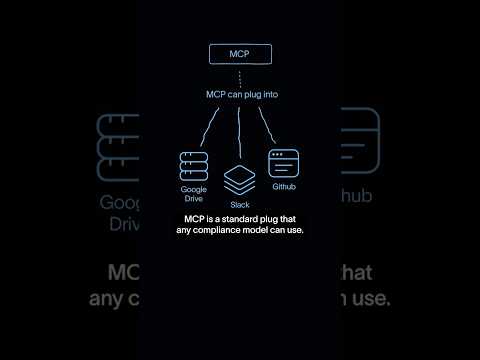
The Model Context Protocol (MCP) is an emerging technical standard designed to replace bespoke, custom-built integrations between AI agents and external tools. By establishing a universal interface—often compared to a USB-C cable for AI—MCP aims to allow developers to build a single server that connects to any compliant system, though claims of its rapid, widespread adoption remain currently unverified.

The Case

  • MCP serves as a standardized connection layer, shifting development from individual integrations for tools like databases, APIs, and file systems toward a reusable protocol architecture.
  • The mechanism functions as a common plug, allowing developers to write one server implementation that then communicates across multiple compliant models or agents.0:15
  • The narrative frames MCP as essential infrastructure for interoperability, directly contrasting it with the prior, fragmented state where every tool connection required custom engineering.
  • Assertions that MCP has already become the default standard for agent-to-world communication are unsupported by evidence in the provided material and should be treated as promotional framing rather than established technical fact.

The 1 Minute Signal Take

If you are building agentic workflows, the utility of MCP lies in eliminating repetitive integration work through standardization. Evaluate its adoption based on your specific infrastructure needs rather than the provided claims of it being a universal industry default.

Pro Analysis

Why it Matters

Standardization is the invisible hand that drives massive growth in software ecosystems. By creating a common language fo...
Full analysis always available on Pro.

Share this

Tags

Written by: 1 Minute Signal Editorial Team