
Why It Matters
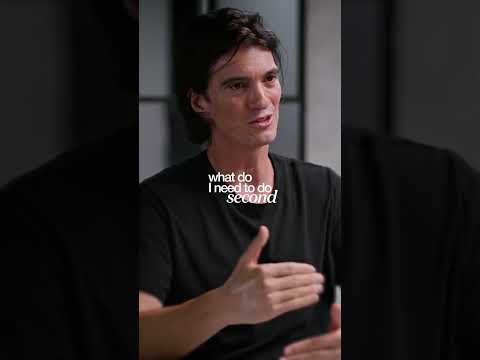
This framework addresses the 'founder’s dilemma' of being torn between the strategic future and the tactical present. It offers a psychological prescription for maintaining momentum without losing sight of the larger objective.
Strategic Implications
The strategy shifts focus from management to personal output. By emphasizing 'knocking on doors' and 'brooming,' the content highlights that in the earliest stages, a founder's primary value is often found in direct customer acquisition and operational grounding rather than high-level strategy alone.
Evidence & Hype Audit
This is motivational, not empirical. It relies on metaphorical reasoning (stars/moon) rather than case studies or data. The speaker’s claim that this is 'the secret of life' should be treated as an anecdotal maxim rather than a proven scientific principle.
Counterarguments
Critics might argue that over-indexing on 'basics' leads to micro-management, which can suffocate growth. Furthermore, relying on personal, manual labor (knocking on doors) does not scale, and failing to delegate early can lead to founder burnout.
Who Should Care
- Early-Stage Founders: To reconcile the stress of high goals with the grit of daily tasks.
- Product Managers: To avoid getting lost in vision while neglecting feature-level execution.
- Career Pivoters: To learn how to apply high ambition to entry-level groundwork.
What to Do Next
- Audit your current schedule to determine if you are spending time on high-level vision or essential tasks.
- Identify your 'first, second, and third' tasks for the next 24 hours.
- Eliminate one abstract, high-level meeting in favor of a direct customer outreach activity.
- Force yourself to perform one 'brooming' task that you would typically delegate or ignore.
- Write down your most ambitious vision, then list the three smallest actions that move you one inch closer to it.