
Why it Matters
Loop engineering represents a fundamental transition in how developers interact with Large Language Models. It signals the maturation of AI from a conversational chatbot into a utility that can perform iterative, goal-oriented work. By moving logic out of the prompt and into the orchestration layer, developers can build more robust, self-correcting systems.
Strategic Implications
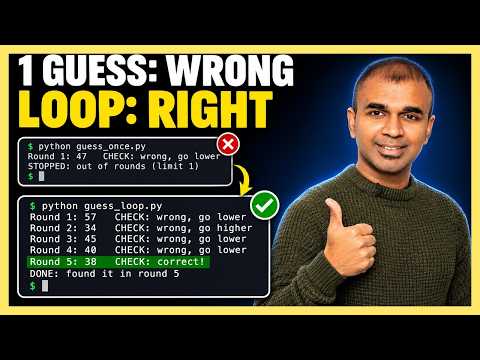
This approach effectively turns AI agents into state-machines. Instead of hoping the model gets a prompt right on the first try, developers treat the model as a stochastic actor within a deterministic container. This is a massive shift for enterprise-level applications where reliability and cost-predictability are mandatory.
Evidence & Hype Audit
The content relies on a 'toy' example (number guessing) to demonstrate a complex architectural concept. While the technical logic is sound, the reliance on an 'unnamed' package (likely 'Praise AI') and the lack of concrete source data for the cited Microsoft research make it feel more instructional than empirical. It is a useful conceptual framework, but not a validated technical standard.
Counterarguments
Critics might argue that 'loop engineering' is merely a fancy term for basic procedural programming wrapped around an LLM. Furthermore, introducing feedback loops increases the total token usage per task, which could negate the cost-efficiency gains of using faster, smaller models in the first place.
Who Should Care
- AI Application Developers: For building agentic workflows that require task-success guarantees.
- Technical Product Managers: To understand the cost-structure of agentic loops and the need for hard stop-limits.
What to do Next
- Implement a hard round-cap variable in your current agentic loop code immediately.
- Test your agents with 'impossible' input scenarios to verify that your stop-logic triggers correctly.
- Map out a state-transition diagram for your AI tasks to identify where feedback loops can replace manual human verification.
- Conduct a cost-benefit analysis on iterative loops to ensure that the gain in accuracy justifies the increase in token consumption.