
Why it Matters
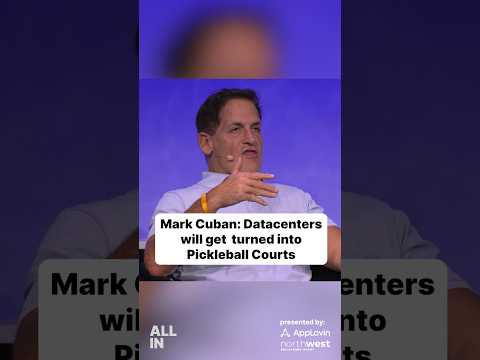
This perspective challenges the prevailing 'build at all costs' thesis in AI. If the speaker's intuition holds, the industry is creating a massive temporal mismatch where today's multi-billion dollar capex decisions are being made on the assumption of a future that may be technologically bypassed by smaller, more efficient models.
Strategic Implications
For investors and operators, the primary risk is 'stuck' capital—building physical shells for an era of computing that may be solved by software performance leaps rather than raw, energy-intensive brute force. The mention of the 'private credit problem' implies that if utilization falters, there is little buffer; the debt servicing costs could force rapid divestment or distress.
Evidence & Hype Audit
This content is low on direct evidence and high on speculative analogy. The speaker offers no data for the claim that firms are borrowing 'hundreds of billions' specifically for this capex in a way that risks their solvency. It functions as a warning shot rather than a detailed economic analysis.
Counterarguments
Critics would argue that the 'fiber' analogy is flawed because AI compute is not merely a transport problem. The demand for training and inference is functionally infinite; unlike bandwidth, which has a saturation point, AI capacity is tied to productivity output, meaning increased efficiency typically triggers increased usage, not abandonment.
What to Do Next
- Review Capex Sensitivity: Analyze how much of current firm expenditure is tied to physical data centers versus software R&D.
- Monitor Debt Profiles: Track the interest coverage ratios of the primary 'market leaders' cited.
- Assess Power Efficiency: Evaluate the trajectory of AI inference costs per unit of compute.
- Diversify Infrastructure: Focus on modular or flexible asset classes that are not strictly purpose-built.