
Why It Matters
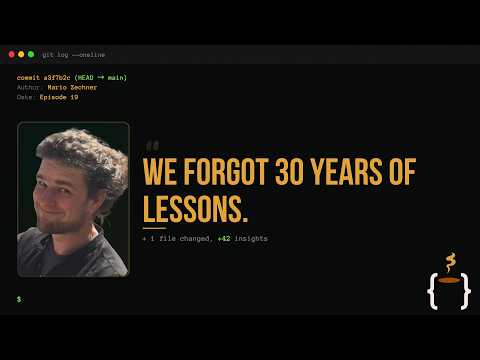
This content serves as a reality check for the 'AI-will-replace-everyone' narrative. It demonstrates that the constraint on development is not code output, but the human oversight required to govern and maintain that code. As AI tools lower the barrier to entry, the value of human expertise—specifically in curation, debugging, and triage—increases relative to the commodity of raw code generation.
Strategic Implications
Businesses adopting agentic workflows face a 'maintenance tax.' Without strict human-in-the-loop policies, organizations risk accumulating massive technical debt characterized by AI-generated solutions that no one truly understands. For developers, the goal should be to specialize in the architectural 'decision-making' layer that agents cannot yet replicate.
Evidence & Hype Audit
Zechner’s perspective is grounded in direct experience as a maintainer, making his observations on PR volume and triage highly credible. He avoids blind optimism, candidly admitting where his work is speculative or based on 'vibes.' While some assertions about Anthropic's marketing strategy are anecdotal, his practical, battle-tested advice on project management is high-signal information.
Counterarguments
Critics might argue that Zechner is an outlier protecting a specific, boutique workflow. In environments where code is disposable—such as rapid prototyping or high-churn testing—the maintenance cost he warns about might be an acceptable trade-off for speed.
Who Should Care
- Engineering Managers: To understand why automated PRs create a new 'triage tax.'
- Open Source Maintainers: To adopt effective strategies for handling AI-generated noise.
- Senior Developers: To optimize their agent-assisted workflows without sacrificing their own understanding of the codebase.
What To Do Next
- Implement a 'concise-issue-first' policy for all incoming contributions.
- Audit your AI tool dependencies for unexpected harness stability issues.
- Reserve agent usage for design exploration rather than bulk code production.
- Practice manual, fundamental coding to prevent cognitive atrophy.
- Explore small, local-inference models for repetitive or constrained tasks.