60% Faster Time-to-Interview: Transforming Hiring with AI Agents with LangChain
Jul 22, 202618m 5s video lengthLangChain
The Signal
LinkedIn engineers Tracy and Shang reveal how they built a hiring agent for small businesses, claiming it reduces time-to-interview by 60%. The core tension lies in balancing the agent's need for dynamic, LLM-driven planning with strict requirements for recruiter-facing determinism, trust, and compliance within a highly regulated company environment.
The Case
Architectural Shift
LinkedIn moved from hard-coded branching to a centralized architecture using LangGraph, selecting it after evaluating 89 frameworks because it integrated with their existing LangChain infrastructure without requiring a rewrite.5:40
The system now uses a plan-execute-replan loop, which the team asserts is significantly more robust than previous methods for handling the iterative, stateful nature of hiring.4:01
Design Constraints
The engineering team rejected LangGraph’s native interrupt-style pause/resume flow because recruiter behavior—which often involves switching topics or stepping away—proved too unpredictable for rigid checkpoints.13:17
They shifted to a context-driven human-in-the-loop model where every user input triggers an end-to-end graph execution, while only the minimum necessary cross-turn context is persisted to keep system state manageable.13:42
Evaluation and Reliability
Because LinkedIn company policy currently restricts sending full production data to LangSmith, the team built a custom internal mirroring system to trace interactions and evaluate performance using human annotation alongside LLM-as-judge techniques.11:02
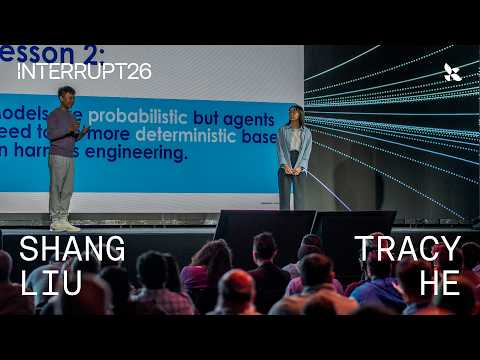
To manage the probabilistic nature of LLMs, the team focused heavily on harness engineering—including template confirmation, one-shot tool guards, and programmatic response assembly—to ensure consistency in recruiter-facing actions.15:02
The 1 Minute Signal Take
The team successfully adapted a sophisticated agentic framework to a constrained product environment by prioritizing workflow-specific interaction patterns over generic architecture capabilities. Their strategy of mirror-tracing production data highlights how enterprise-scale adoption often requires building custom reliability layers to bypass institutional policy limitations.