
- LEO systems provide superior user performance compared to GEO because of the substantially reduced signal travel distance.
- Earth's geography poses a utilization challenge, as satellites frequently pass over ocean areas devoid of potential household customers.
- SpaceX’s Starlink is becoming a primary revenue pillar as the company prepares for its anticipated IPO.
- Market forecasts for the satellite broadband sector suggest total potential value could reach over $100 billion by 2035.
Back to Feed
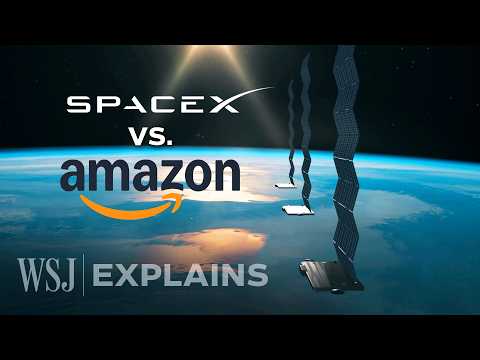
Amazon vs. SpaceX: The High-Stakes Battle for Space Internet | WSJ
This content examines the competitive landscape of Low Earth Orbit satellite constellations, comparing the development progress of Amazon and SpaceX while exploring the economic constraints of satellite-based broadband services.
Key Takeaways
- SpaceX currently dominates the LEO market with roughly 12,000 satellites launched, significantly outpacing Amazon's initial deployment of 300.
- Consumer broadband in affluent markets faces limited growth potential due to existing infrastructure, forcing LEO operators to pivot toward high-value mobility sectors like airlines and shipping.
- The extreme capital and scaling requirements of LEO systems effectively limit the player list to a handful of ultra-wealthy entities like SpaceX and Amazon.
Talking Points
Analysis
Strategic Significance: LEO represents the new frontier of global connectivity. Its ability to bypass terrestrial infrastructure m...
Full analysis available on Pro.
Time saved:
Back to Feed