Kubernetes and retiring at the top with Kelsey Hightower

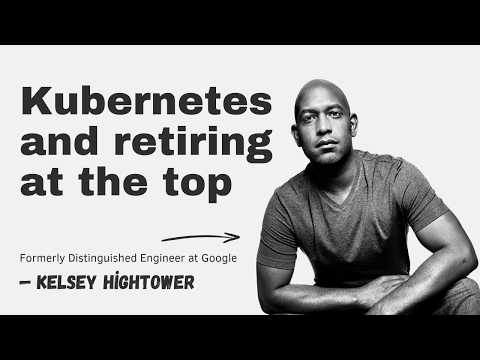
Video thumbnail: Kubernetes and retiring at the top with Kelsey Hightower
Jun 3, 20262h 52m 11s video lengthThe Pragmatic Engineer

The Signal

Kelsey Hightower, a former distinguished engineer at Google who retired at 43, attributes his career success to a strategy of public work and impact-focused engineering rather than hierarchy. He asserts that Kubernetes’s dominance was driven by the existing Docker ecosystem and the introduction of a typed, declarative infrastructure model. While the technical origins of Kubernetes’s success remain an interpretive debate, Hightower’s career transition—from DSL installation to major tech inflection points—is a settled record of using market-based leverage over ultimatums. He frames the current AI era as a tool-first endeavor, warning against naive adoption and advising engineers to preserve fundamental systems knowledge to remain resilient against commoditization.

The Case

  • Hightower emphasizes that Docker was the "number one success criteria" for Kubernetes, as it provided a pre-existing workflow consensus that allowed developers to transition without abandoning their container-level habits.0:03
  • He argues that Kubernetes succeeded where projects like Docker Swarm struggled because it treated infrastructure as a typed, declarative data model—moving from imperative configuration to resilient control loops.2:16
  • His career progression was repeatedly accelerated by treatng every public talk and open-source contribution as an interview, leading to high-leverage job offers from companies like puppet's founder, Luke Kanies.61:56
  • When Microsoft approached him with an offer that effectively added a zero to his compensation, he used the data to negotiate a Google match without resorting to a career-damaging ultimatum.107:25
  • He advocates for an "impact over activity" philosophy, citing a formative experience where he abandoned the standard phone-based ticket queue to automate the underlying issues, consistently driving the backlog to zero.30:45
  • His advisory practice is structured to avoid free labor: he mandates a one-year term, no equity cliff, a 10-year exercise window, and a paid monthly retainer.129:06
  • He warns that the panic surrounding GenAI stems from a narrow definition of software engineering; he argues that while code-typing may be commoditized, deep expertise in hardware, boot sequences, and systems architecture remains a durable defense against displacement.138:04

The 1 Minute Signal Take

Hightower is a rare industry voice who correctly identifies the difference between performative busyness and actual systems impact. His perspective on AI is pragmatic, steelmanning it as a force multiplier while rightly pivoting to the human-centric fundamentals software engineers often forget to master. Watch this video if you want to understand the architectural philosophy behind cloud-scale infrastructure; the summary captures his career narrative, but the video provides the necessary tone for how an engineer at that level actually thinks about leverage.

Pro Analysis

Strategic Significance

This narrative highlights the transition from imperative 'hand-crafted' operations to declarative, data-driven sy...
Full analysis always available on Pro.

Time saved:2h 50m

Share this

Tags

Written by: 1 Minute Signal Editorial Team