
Why It Matters
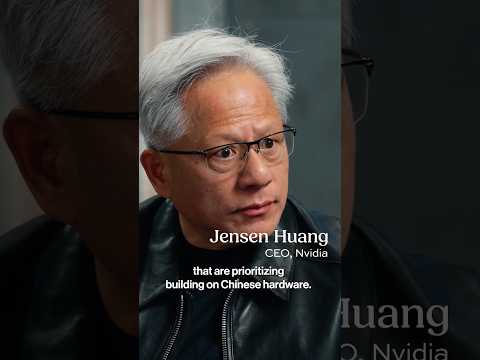
This perspective represents a significant divergence from the current hawkish consensus in Washington. Coming from the leader of the world’s most critical AI infrastructure company, Huang’s comments highlight the tension between national security policies and the globalized, interdependent nature of the semiconductor supply chain.
Strategic Implications
If Huang’s view gains traction, we may see increased corporate pressure on the U.S. government to loosen export controls, specifically for legacy or non-frontier hardware. It signals that Nvidia views the Chinese market as indispensable for sustaining the scale required for future AI R&D, suggesting that continued isolation could inadvertently stunt global progress in AI safety.
Evidence & Hype Audit
Huang’s claims rely heavily on personal conviction rather than empirical data. The assertion that 'China is not an enemy' is a normative framing, not a factual one, and the claim about the sheer density of Chinese AI researchers lacks specific citations. The argument is highly persuasive for business leaders but may be perceived as biased given Nvidia’s direct interest in the Chinese market.
Counterarguments
Critics of this view would argue that the dual-use nature of advanced AI chips makes them a strategic liability. From this perspective, preventing China from accessing high-end compute power is a necessary delay tactic to maintain the U.S.'s technological lead in the ongoing geopolitical rivalry.
Who Should Care
- Policy Analysts: Should evaluate the long-term costs of decoupling on the U.S. semiconductor ecosystem.
- Tech Investors: Should monitor the shifting threshold of export restrictions as a key determinant for growth.
- Global Security Professionals: Should consider whether AI safety can truly be decoupled from broader geopolitical containment.
What to Do Next
- Audit supply chain dependency on the Chinese market.
- Monitor changes in U.S. export licensing for 'older' chip architectures.
- Track bilateral dialogue initiatives focused on AI risk management.
- Research the migration of Chinese AI researchers to global labs.
- Assess the specific impact of restricted access on DeepSeek and similar organizations.