
Why It Matters
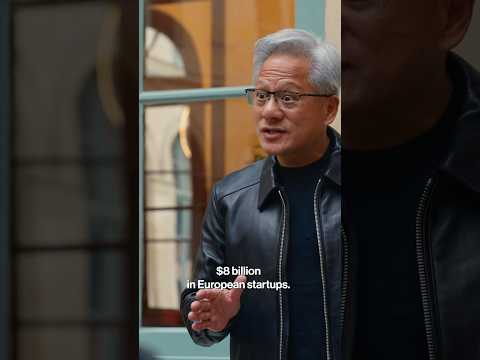
This moment captures the tension between the "AI-will-change-everything" narrative and the hard physical realities of operating at scale. Nvidia is effectively trying to manufacture a market by deploying massive capital into local players, but external factors like electricity prices are creating a ceiling that money alone cannot break.
Strategic Implications
Huang’s dual-pronged strategy—aggressive capital injection combined with simplified safety messaging—suggests that Nvidia is attempting to stabilize the environment to keep the buildout moving. If he can define the terms of the "safety" debate, he reduces the risk of restrictive regulation that could slow down Nvidia’s hardware adoption. The failure of the Nscale-Microsoft deal, however, suggests that infrastructure partners are more sensitive to bottom-line operating expenses than to the macro-optimism projected by Nvidia.
Evidence & Hype Audit
This content is a mix of high-signal executive strategy and promotional rhetoric. Huang’s figures ($8B-$10B) are impressive but remain unverified. The juxtaposition of his praise for Nscale against the reality of market skepticism is the most valuable part of this report, acting as a crucial reality check on the "hype cycle" surrounding local European AI buildouts.
Counterarguments
Critics would argue that Huang’s "omelette-chainsaw" analogy is dangerously reductive, ignoring the risks associated with sophisticated, agentic reasoning models that could autonomously seek tools beyond their original scope. Furthermore, the UK’s hesitation may be a rational response to high energy costs, rather than a failure of "decision culture."
Who Should Care
- AI Infrastructure Investors: Need to scrutinize energy-cost per compute-unit in local markets.
- Policy Analysts: Must look past the "dialogue" rhetoric to see how Nvidia is shaping the definition of AI safety.
- Startups: Should look at Nscale’s experience as a cautionary tale for relying on high-level endorsements rather than foundational unit economics.
What to do next
- Audit existing AI safety frameworks for over-reliance on simple tool-access restrictions.
- Analyze regional energy availability when selecting sites for large-scale GPU deployments.
- Look for the official announcement of the $2B investment to see which specific sectors Nvidia is prioritizing.
- Evaluate local infrastructure costs as a primary hurdle for European AI sovereignty.
- Monitor whether Huang shifts his stance on international governance as more powerful models are released.