
Why It Matters
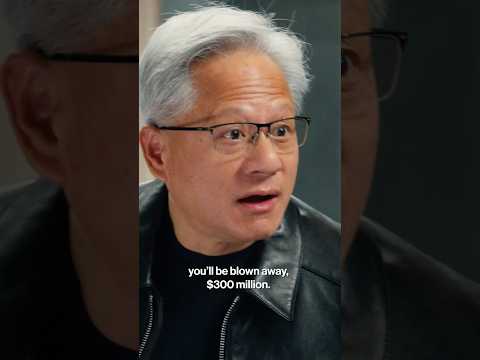
This conversation provides a rare, anti-establishment glimpse into the mindset of a leader presiding over a trillion-dollar industry. In an era where investors demand extreme visibility and specific roadmaps, Huang’s public rejection of such planning is either a brilliant framing technique to lower expectations or a genuinely unconventional management style.
Strategic Implications
If Huang is being literal, his leadership model relies heavily on emergent strategy rather than predictive planning. For his organization, this means the 'strategy' is likely baked into the culture of rapid iteration rather than documented in static, multi-year plans.
Evidence & Hype Audit
This content is high-signal regarding Huang’s personal philosophy but low-signal regarding factual, testable data. It is inherently subjective and lacks independent verification of his 'no-plan' claim. It serves as a qualitative insight into his character rather than a quantitative audit of his operations.
Counterarguments
The biggest counterargument is that a company of NVIDIA's scale cannot operate without a roadmap. Critics would argue that his 'no end game' rhetoric is a rhetorical shield—it keeps his options open and prevents him from being boxed in by investor promises, even if highly detailed internal plans actually exist.
Who Should Care
- Founders: To understand the distinction between survival-mode operations and the 'golden handcuffs' of long-term planning.
- Investors: To weigh whether they are backing a structured executioner or a visionary navigator.
- Managers: To learn the difference between having a goal and being trapped by a rigid roadmap.
What to Do Next
- Examine whether your current projects have fixed endpoints that actually stifle necessary innovation.
- Evaluate if your 'business plans' are serving as blueprints for execution or as arbitrary constraints.
- Focus on building 'optionality' into your work instead of chasing a single, predefined success metric.
- Analyze if you are confusing 'having a direction' with 'having a map,' and choose the former.