
Back to Feed
Can the US-Iran ceasefire hold? | The Economist
The Signal
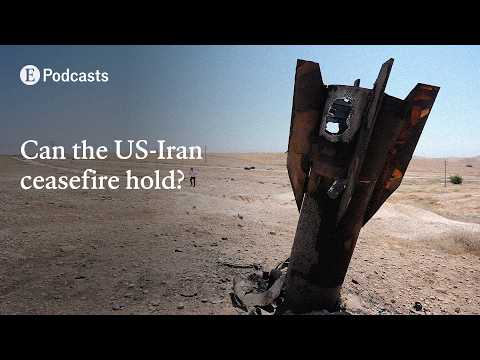
The fragile two-month-old America-Iran ceasefire is under extreme stress following an overnight ballistic missile exchange and new Israeli airstrikes. The conflict centers on a bitter dispute regarding whether Israeli operations in Lebanon violate the accord, a linkage Teheran insists upon but Israel steadfastly rejects.
The Case
- Iran launched multiple waves of ballistic missiles at Israel after Israeli combat intensified in Lebanon, a theater Hezbollah — an Iranian-backed militia — continues to attack using fiber-optic drones that Israel struggles to intercept.
- Israel retaliated with airstrikes on Iranian missile sites and a petrochemical plant, a choice the Iranian government has historically treated as a major escalation warranting economic or regionalized counter-strikes rather than simple military tit-for-tat.
- Donald Trump, the U.S. President, publicly claimed credit for controlling the situation, stating, "Netanyahu has to accept whatever deal I impose. I call the shots," though his private directives to Israel remain unknown and may be more permissive than his public posture suggests.
- While the U.S. has avoided direct military strikes, the ceasefire’s viability is now tethered to whether the Trump administration moves to definitively halt Israel's further action or permits continued escalation that risks drawing in Gulf states.
- The claim that America and Iran still technically favor preserving the deal is an inference based on strategic incentives, unsubstantiated by direct evidence, and the current exchange’s trajectory suggests the conflict could broaden beyond the current, largely contained parameters.
The 1 Minute Signal Take
The video is essential for understanding how the public/private split in U.S. policy is currently masking a volatile policy shift, but you can skip it if you are already tracking the specific economic-escalation precedent from March. The core risk is that by targeting energy infrastructure, Israel has moved the goalposts for retaliation in a way that makes diplomatic containment exponentially harder for the White House.
Time saved:
Tags
Back to Feed