
Why It Matters
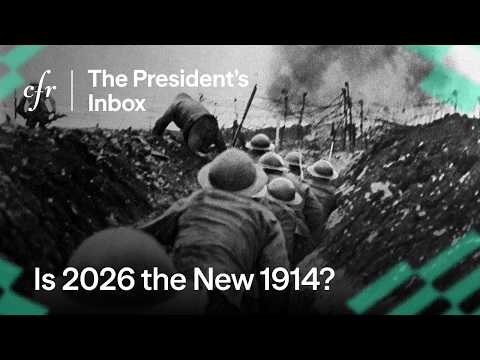
This analysis moves the discourse away from the comfortable—but likely outdated—Cold War paradigm. By highlighting that 1914 was defined by structural tensions, nationalist fervor, and a failure to pause under pressure, Westad provides a framework for understanding modern escalation. It moves the focus from 'deterrence' to 'crisis mismanagement,' which is a more accurate lens for our current, multipolar moment.
Strategic Implications
If Westad is correct, current U.S. strategy—which emphasizes economic decoupling and deterrence-by-denial—might be exacerbating the risk of a miscalculation. The implication is that we need more 'strategic empathy' (understanding what an adversary actually fears) rather than just 'strategic clarity' (declaring red lines).
Evidence & Hype Audit
Westad’s account is historically grounded but relies heavily on a specific interpretive reading of 1914 (the 'sleepwalking' thesis). While his quantitative comparison of WWI casualties is striking, it is illustrative rather than diagnostic. The argument is cautious rather than alarmist, though his rejection of nuclear deterrence as 'ultimate' is a significant, speculative departure from current consensus.
Counterarguments
Critics might argue that nuclear weapons provide a 'nuclear floor' that 1914 entirely lacked. The presence of existential threat for both sides in a modern conflict fundamentally alters the risk calculus for any leader—a constraint that was absent in the era of empires.
Who Should Care
- Policymakers: To recognize that transactional diplomacy in a multipolar world is a high-risk game.
- Defense Analysts: To re-examine whether their escalation models assume a level of rational constraint that history suggests leaders under pressure often abandon.
- Corporate Strategists: To recognize that supply chain integration does not provide a 'peace dividend' when nationalistic security concerns take precedence.
What to Do Next
- Audit existing 'red lines' to determine if they are perceived by adversaries as security threats or bargaining chips.
- Increase the frequency of direct, non-public diplomatic channels between great powers.
- Shift from 'punishment' based deterrence models to 'off-ramp' models.
- Invest in crisis-management communication platforms that remain active even during open conflict.
- Conduct historical 'red-teaming' exercises using 1914-style escalation scenarios rather than Cold War crisis scenarios.