
Back to Feed
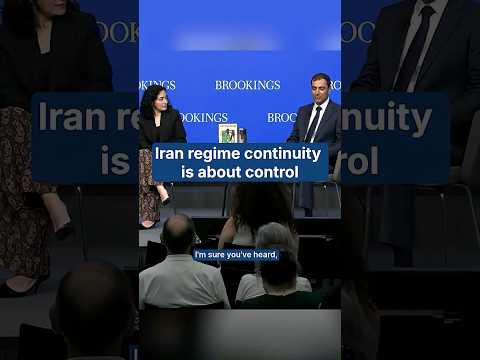
Iran regime continuity is about control
The Signal
The speaker argues that Iran’s ruling system deliberately projects political survival through symbolic leadership continuity, a resistance that they claim persists even against foreign military pressure. While the narrator cites a historical shift from revolutionary independence to some modern desire for foreign strikes, they maintain that genuine regime change has not occurred, or has arguably worsened the status quo.
The Case
- The speaker claims the repeated use of names like "Khomeini" and "Khamenei" is a calculated signal of ongoing authority, intended to show that the same system remains in complete control despite decades of internal and external challenges.
- The narrator asserts that the Iranian apparatus is so resistant that no foreign intervention has successfully created meaningful disruption or systemic disconnection, though they provide no evidence to support this broad conclusion.
- While the 1979 Islamic Revolution was defined by a strong, broad-based desire for independence from Western and Eastern powers, the speaker claims an "interesting" evolution where some Iranians—exemplified by characters in an unspecified book—now welcome U.S. and Israeli strikes on military targets.
- The speaker contends that for many Iranians, recent conflicts have not produced real regime change, asserting that if any shift exists, the public perceives the current iteration as even worse than what preceded it.
The 1 Minute Signal Take
The narrator oscillates between reporting anecdotal literary observations and making sweeping, high-stakes claims about regime stability without providing an evidentiary basis for the latter. The video is worth watching if you want to see the specific, symbolic arguments used to justify the perception of Iranian state resilience, but skip it if you are looking for an empirically grounded analysis of Iranian public opinion.
Time saved:
Tags
Back to Feed