
Channel: Council on Foreign Relations
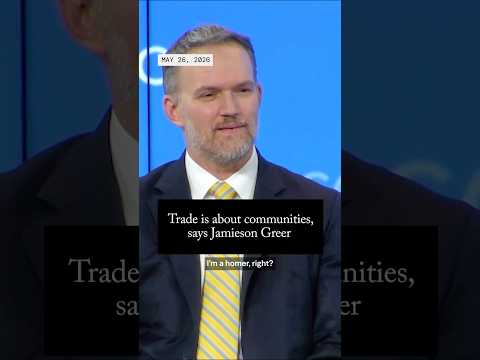
Trade is about communities, says Jamieson Greer
The Signal
The speaker, a self-described “homer” dedicated to an “America first” trade philosophy, argues that industrial policy should be evaluated through its impact on families and communities rather than abstract economic efficiency. He grounds this conviction in recent domestic factory tours, where he claims firsthand observation of deep-rooted multi-generational employment patterns at sites like the Micron Fab in Manassas. While he maintains good relations with foreign counterparts, he asserts that direct, on-the-ground engagement is essential to understanding the human reality of economic activity.
The Case
- During a visit last Friday to the Micron Fab — a major semiconductor manufacturing facility in Manassas — the speaker observed new clean rooms and facilities, reporting a $2 billion expansion at the site.
- The speaker claims that when he asks workers if they have friends or family employed at the same plant, they “almost always” answer yes, citing examples like multiple generations working the same production lines.
- He frames these localized hiring patterns as evidence that industrial activity serves as an anchor for communities, suggesting that trade policy often focuses too narrowly on capital allocation at the expense of human stakes.
- While the speaker emphasizes his preference for direct field visits, he notes that this domestic orientation does not preclude maintaining professional relationships with foreign international counterparts.
- The speaker’s conclusions regarding the prevalence of familial employment ties are based entirely on informal, anecdotal conversations; no specific sample size or systematic hiring data was provided to support the universality of his claims.
The 1 Minute Signal Take
The speaker’s narrative is a classic appeal to the human element of industry, though his core policy claim relies on anecdotal observation rather than systematic economic inquiry. He makes no attempt to disguise his ideological priors, making the content feel more like a personal manifesto than a rigorous policy analysis. Skip it, as this summary covers the entire substance of his argument and highlights the anecdotal nature of his evidence.
Tags
Channel: Council on Foreign Relations