
Back to Feed
Inside YC's AI Playbook
The Signal
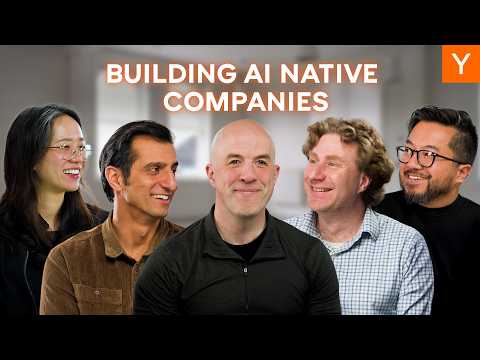
YC has built an internal AI infrastructure that moves beyond simple chat, utilizing a centralized database and a registry of over 350 tools that allow non-engineers to execute complex workflows. The central tension pits this model of integrated, agentic software against the prevailing industry trend of 'bolting on' AI features as locked-down, developer-controlled copilot tools. Speakers argue that true organizational 'superintelligence' arises not from chat, but from agents wrapping deterministic tools in an environment where context is broadly shared and control is distributed to the user.
The Case
- YC’s primary unlock was consolidating organizational context—including SQL databases, model files, and CRM notes—into a single Postgres database, allowing agents to perform queries that previously required hours of work by data analysts.
- The organization uses a feedback loop where agent conversations and meeting transcripts are reviewed nightly to improve 'skills'—like a canonical two-sentence company description—which partners argue often outperform human counterparts.
- Transparency acts as a management layer: agent conversations are visible to all full-time employees, which the team claims both facilitates collective learning and provides social control over risky behaviors.
- The team advocates for a 'just-in-time' software model where minimal, self-extending harnesses wrap deterministic tools, which they contrast with the bloated, rigid codebases of the past.
- Speakers differentiate between 'five kings' AI—centralized platforms where users lack control over prompts—and a 'personal AI' future inspired by the homebrew computing era, where users own their workflows and data.
- Pete Kumman, a YC general partner who created the testing platform Optimizely, argues that the developer-hidden AI common in current products restricts utility by keeping the 'prompt' context opaque to the user.
- The claim that this centralized-yet-open model functions as an 'organizational superintelligence' is asserted by speakers without independent, cross-industry verification.
The 1 Minute Signal Take
The evidence-backed case here is strong for the productivity gains of centralized, agent-accessible data. While the speakers' broader vision of a decentralized 'personal AI' future remains a design philosophy rather than a settled fact, the efficiency gains they demonstrate in scaling expert knowledge through transcripts are tangible. Watch the video if you want to see the specific architectural 'primitives' they propose for agent-native software, as these details are far clearer in their live demonstration than in summary.
Time saved:
Back to Feed