
Why It Matters
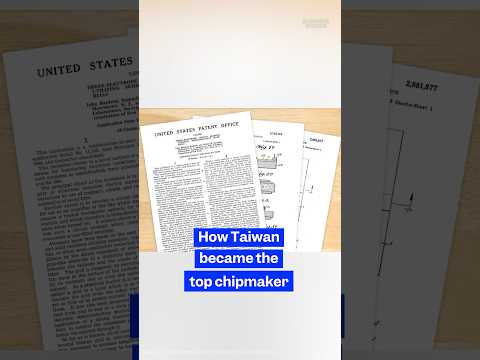
The vulnerability of the modern digital economy is anchored in a highly concentrated manufacturing bottleneck in Taiwan. The shift from an era of integrated design and manufacturing (IDM) to a foundry-based model has resulted in an unprecedented chokepoint that impacts everything from consumer electronics to national defense systems.
Strategic Implications
Businesses now face high political-risk premiums. Companies that rely on TSMC must audit their supply chains for geographic and vendor diversity. For Intel and other legacy IDMs, the lesson is that specialization can be a vulnerability if it prevents modular pivots in the face of platform shifts like mobile or AI.
Evidence & Hype Audit
The content represents industry-standard historical narrative but should be treated as a high-level summary rather than a forensic audit. The claim of '70% market share' is a common industry rule-of-thumb, though exact percentages fluctuate based on market definitions (e.g., node size, total revenue vs. volume).
Counterarguments
One could argue that Intel’s decision was not a failure of vision but a rational optimization for return on invested capital at the time. Focusing on lucrative, established server and PC markets often yields better short-term returns than entering low-margin, high-volume mobile chip fabrication.
Who Should Care
- Supply Chain Architects: To identify single-source dependencies.
- Tech Investors: To anticipate capital expenditure shifts as the US rolls out industrial policy support (e.g., CHIPS Act).
- Policy Analysts: To model the real-world impact of reshoring manufacturing.
Next Steps
- Analyze current internal capacity limits for advanced-node manufacturing in the US.
- Assess the transition of competitors currently attempting to break the foundry monopoly.
- Evaluate the feasibility of a multi-vendor manufacturing strategy for upcoming hardware projects.
- Audit total exposure to foundries located within high-geopolitical-risk zones.