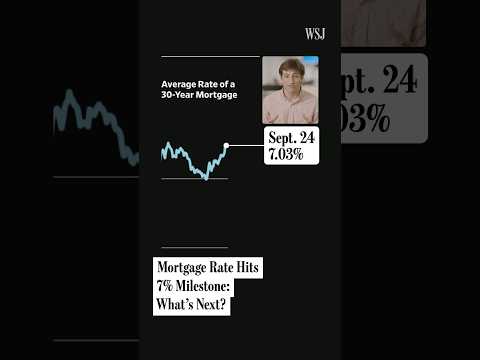
Mortgage Rates Hit 7%. What’s Next for the Housing Market?

Video thumbnail: Mortgage Rates Hit 7%. What’s Next for the Housing Market?
Sep 24, 20262m 5s video lengthThe Wall Street Journal

The Signal

Mortgage rates have returned to 7% after a brief period of optimism, stalling the expected 2026 housing recovery and forcing a re-evaluation of current market dynamics. While affordability remains constrained, an uptick in inventory suggests that life-event-driven moves are beginning to override historical rate sensitivity, leading some analysts to suggest this may be a new, durable normal for the housing sector.

The Case

  • Mortgage rates hit 7% this week, reversing a trend from February when rates dipped below 6% and triggered a temporary surge in applications to their highest levels since 2022.0:02
  • The transcript attributes this reversal to a macro-driven bond market selloff, noting that the 10-year Treasury yield—which mortgage rates track due to their typical 10-year duration—hit 5% amid concerns over government deficits and persistent inflation.0:25

Market Activity and Inventory

  • Housing demand has weakened significantly, with August home sales dropping to their lowest level since the beginning of last year.1:13
  • Despite this soft demand, housing inventory has increased from 1.1 million homes in 2023 to 1.6 million this year, reaching levels not seen since before the pandemic as homeowners finally begin to move for life reasons like new jobs or growing families.

Interpretation of Future Trends

  • The transcript asserts that a "war in Iran" acted as a primary catalyst for the recent market volatility, though this causal link remains an unsupported claim within the source.
  • The core dispute remains whether the current environment of 7% rates is a temporary spike or a "new normal," with the source leaning toward the latter while acknowledging that macro variables like inflation and deficits remain the primary swing factors.

The 1 Minute Signal Take

The housing market is currently caught between macro-level bond yield pressures and the micro-level reality that households must eventually transact regardless of interest rates. Expect transaction volumes to remain muted until either interest rates stabilize or market expectations adjust to the reality of sustained higher borrowing costs.

Pro Analysis

Why It Matters

The housing market functions as the primary transmission mechanism for household wealth in the United States. When the re...
Full analysis always available on Pro.

Time saved:18s

Share this

Tags

Written by: 1 Minute Signal Editorial Team