
Why It Matters
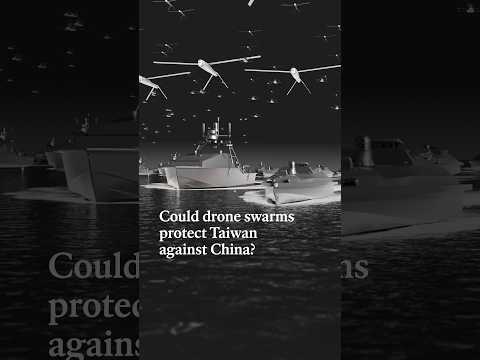
The transition to drone-swarm warfare represents a fundamental shift in military economics. By moving from a few 'exquisite,' high-cost platforms to millions of cheap, autonomous assets, Taiwan is attempting to solve a geographic disadvantage through sheer industrial scale and information-age warfare.
Strategic Implications
If Hellscape proves viable, it could provide a blueprint for other smaller nations to deter regional superpowers. It forces an invader to face a 'death by a thousand cuts' scenario, where the attacker's own precision weapons become liabilities as they are wasted on low-value targets. However, if this strategy fails—or if the required volume of drones cannot be produced—Taiwan may be left with a superficial defense that fails to actually deter a calculated military move.
Evidence & Hype Audit
The content relies on military doctrine and expert estimates rather than combat-tested data. The claim that China lacks an amphibious invasion capability is an assertion of strategic uncertainty rather than a proven fact. While the logic of drone-driven attrition is well-supported by the war in Ukraine, the application of this logic to a full-scale maritime invasion is speculative.
Counterarguments
Critics might argue that massing drones is insufficient against a near-peer power that dominates the electromagnetic spectrum. If China can effectively neutralize the AI controllers or the satellite links required for swarm coordination, the drones may become useless floating debris. Additionally, relying on suicide boats and swarms could lead to a 'maginot line' mentality, where resources are poured into one specific technology while other traditional threats (like blockade tactics) are neglected.
Role-Specific Takeaways
- Defense Planners: Focus on sensor-jamming resilience and industrial capacity rather than just unit procurement numbers.
- Investors: Monitor companies involved in low-cost, mass-producible autonomous systems and AI edge-computing.
- Policy Makers: The primary bottleneck is political; focus on signaling and treaty alignment to maintain the credibility of the deterrent.
What to do next
- Audit domestic industrial capabilities for rapid drone production.
- Invest in testing autonomous swarm behavior under adversarial electronic warfare conditions.
- Re-evaluate current procurement targets against worst-case expert scaling requirements.
- Strengthen bilateral logistics and intelligence-sharing protocols for drone-swarm operations.