
Why It Matters
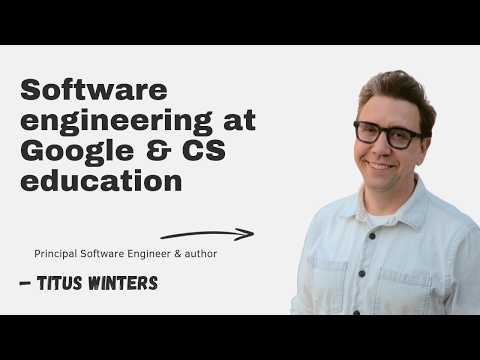
This content is a direct challenge to the current industry obsession with 'AI coding assistants' as a panacea. By grounding the discussion in the reality of one of the world's largest codebases, Winters cuts through the hype to suggest that the bottleneck in engineering isn't writing code—it's managing change and verifying results.
Strategic Implications
Organizations should stop optimizing for 'lines of code' and start optimizing for 'changeability.' This means investing in deterministic infrastructure (linting, rewrites, and specs) so that AI-generated code is constrained by a safety harness. If a company treats AI as a 'black box' output generator, they are incurring technical debt at an unsustainable rate.
Evidence & Hype Audit
This is high-quality, experience-based evidence. While the claim that 'CS education hasn't changed since 2000' is a broad generalization, it is supported by the speaker’s role on curriculum committees. His claims are internally consistent and avoid the 'magic AI' trope by advocating for deterministic, auditable systems.
Counterarguments
Critics might argue that emphasizing 'process' and 'system design' over 'raw coding skill' creates a high barrier to entry that prevents grassroots innovation. There is also the risk that in trying to systematize everything, organizations become too bureaucratic to pivot when the market demands radical, non-standard approaches.
Who Should Care
- Engineering Managers: Must shift focus from velocity to quality of change and team culture.
- CS Educators: Should overhaul assessments to include oral defense and process audit.
- Entry-level Engineers: Must prioritize building domain depth over learning generic, easily automated coding patterns.
What To Do Next
- Audit existing review processes for 'readability' rather than just feature completion.
- Replace frequent, shallow AI code reviews with automated lint rules.
- Implement 'blameless postmortems' to turn failures into codified system improvements.
- Revamp interview rubrics to include system design and communication skills over algorithms.
- Create clear, internal standards for AI-assisted code to prevent 'slop' accumulation.