
Why it Matters
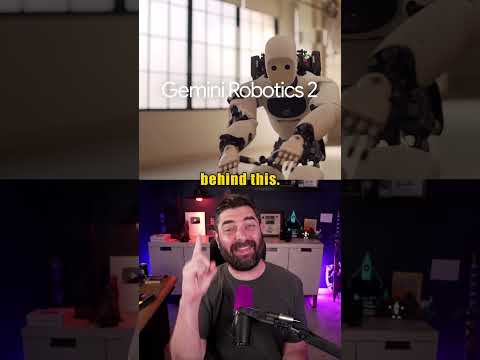
Gemini Robotics 2 represents a pivot toward 'robotics-as-software.' By de-coupling the intelligence layer from the hardware, Google is attempting to solve the extreme fragmentation in the robotics industry, where proprietary hardware usually requires custom software stacks. A universal, fast-adapting intelligence layer could dramatically lower the barrier to entry for widespread robot deployment.
Strategic Implications
If the 'few hours' adaptation claim is accurate, current robot manufacturers face a risk of commoditization; the value migrates from the hardware design to the underlying software model. This effectively turns the robot chassis into an 'edge appliance' for the model, changing long-term capital allocation strategies for industrial automation.
Evidence & Hype Audit
This announcement is a marketing-driven narrative. The absence of comparative benchmarks, independent validation, or technical white papers means it is currently high-trust in the 'revealed' sense but low-trust in the 'performance verified' sense. The terminology is intentionally accessible, prioritizing a vision of success over the engineering realities of sensor integration or latency.
Counterarguments
Critics might argue that dexterity is not just a software problem—it is a hardware-co-design problem. If the underlying hardware doesn't have the requisite actuators or sensors, software abstractions (no matter how advanced) will reach a hard performance ceiling regardless of the model's intelligence.
Who Should Care
- Industrial Automators: Seeking ways to reduce maintenance and setup overhead.
- Investors: Tracking companies that prioritize software-led hardware ubiquity.
- Supply Chain Managers: Identifying potential ways to automate non-repetitive, complex manipulation tasks.
What to Do Next
- Monitor public repository updates for SDKs or API documentation.
- Request demonstrations of the 'on-device' latency compared to the cloud-linked version.
- Evaluate if your existing hardware fleet can be a candidate for the 'few hours' integration test.
- Track if independent research verifies the '22 degrees of movement' dexterity claims.