
Back to Feed
You Can't Tell If I'm Real Anymore. And That's Now YouTube's Problem Too.
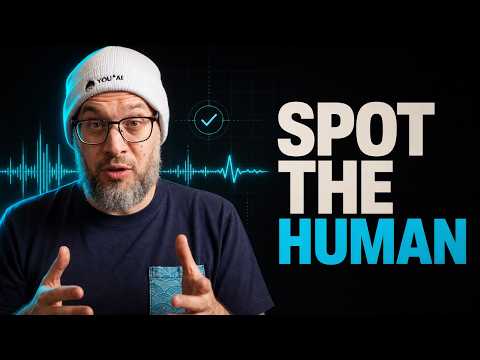
The Signal
The central risk of AI in media is not the perfect deepfake that requires forensic analysis to detect, but rather "good enough" synthetic content consumed casually. Because most audiences view content while multitasking, plausible fakes are already sufficient to mislead. The speaker argues that binary "AI or no AI" questions are too blunt, proposing instead a "creator trust stack" centered on accountability, consent, and clear disclosure to preserve the only asset that will remain scarce: human judgment.
The Case
- The speaker demonstrates the risk by using a disclosed, synthetic clone of their own voice, arguing that clean source audio already makes convincing imitation trivial in common, low-attention consumption environments.
- The core analytical framework is a "creator trust stack"—a five-layer governance model comprising disclosure, provenance, control, human judgment, and ultimate accountability—to move beyond crude binary debates about AI use.
- AI-related risk is framed as a matter of where a human took responsibility, rather than whether tools were used at all, distinguishing benign audio cleanup from potentially deceptive, non-consensual voice or face cloning.
- The video asserts that businesses must establish formal policies on voice cloning, likeness usage, and disclosure before a public scandal forces their hand, as reactive governance often fails to protect audience trust.
- The speaker makes a future-oriented claim that trust will become the primary competitive asset for creators and analysts, though this remains an unproven prediction regarding market behavior.
The 1 Minute Signal Take
This video is a coherent, practical guide for creators and organizations attempting to navigate AI integration without defaulting to deception. Skip it if you are already familiar with the "human-in-the-loop" governance model, but watch the first few minutes if you want to see a clean, responsible execution of synthetic voice disclosure—the best example of the principle argued.
Time saved:
Back to Feed