
Back to Feed
What the 14th Amendment says about birthright citizenship
The Signal
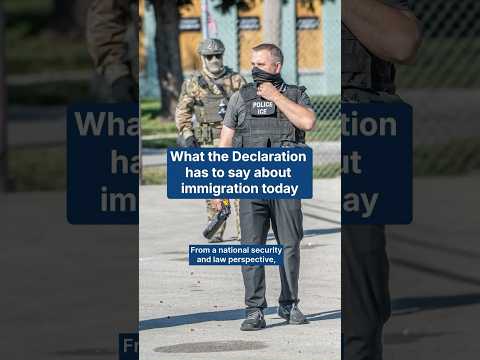
This video posits that current U.S. border enforcement efforts stand in tension with the founding-era vision of relatively open immigration and incorporation. While the speaker describes the early vision as favoring liberal admission, they argue against a direct one-to-one translation to modern policy, citing fundamental differences in geography, resources, and constitutional authority.
The Case
- The speaker claims that the authors of the Declaration of Independence intended a "very very open" migration vision, which included providing land, citizenship, and naturalization, though this is presented as historical interpretation without provided documentary evidence.
- The constitutional framework for migration and naturalization was largely left for Congress to regulate, rather than being hard-coded into the Constitution itself, according to the speaker.
- Modern policy and legal interpretation are presented as distinct spheres: while current policies might drift from the founding vision due to changed conditions, historical context remains a pivot for interpreting the meaning of texts like the 14th Amendment.
- The speaker acknowledges current conditions—such as the transition from a continent of "unknown expanse" to a modern state—as grounds for why historical policy cannot be applied mechanically to today's border-security disputes.
- The current administration is characterized as pursuing a less open posture than the original framework suggests, though the speaker notes this is a point of significant, unresolved normative and legal tension.
The 1 Minute Signal Take
The speaker provides a helpful analytical filter by distinguishing between malleable policy and immutable historical interpretation, though their characterization of an "original open vision" remains an unverified, interpretive claim. Skip it—the summary captures the core tension and the analytical mechanism without requiring the full video.
Time saved:
Back to Feed