
- The shift from a 'mass market' to a 'premium' migration demographic signals a narrowing economic base that could undermine future prosperity.
- Insurance costs are being driven higher by a combination of fraud and the expansion of covered perils, creating a cost-burden that the government must address through stricter enforcement.
- Retaining younger talent is tied to a mix of job availability, city safety, and educational quality rather than just real estate development alone.
- Policy success is measured by the ability of families to remain in their hometowns, requiring a balance between business-friendly tax climates and tangible cost-reduction for residents.
Back to Feed
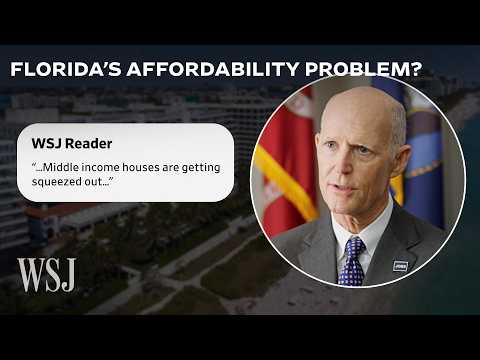
Does Florida Have an Affordability Problem? We Asked Sen. Rick Scott | WSJ
Florida is facing a localized affordability crisis where rising housing and insurance costs threaten to displace the middle class and working-age residents in favor of an increasingly wealthy population.
Key Takeaways
- Rising living costs and insurance premiums are driving a demographic shift, pushing middle-class families and younger residents out of the state.
- The regional economy faces long-term risks if professional recruitment and affordable housing policies fail to retain a broad, working-age population.
- State leadership emphasizes that sustained economic success requires a dual focus on aggressive private-sector recruitment and aggressive crackdowns on insurance-market fraud.
Talking Points
Analysis
Strategic Significance Florida’s situation serves as a bellwether for rapid-growth regions failing to manage infrastructure and af...
Full analysis available on Pro.
Time saved:
Back to Feed