
- The income-happiness relationship is weak and non-linear, with evidence of satiation points where marginal utility for happiness drops significantly.
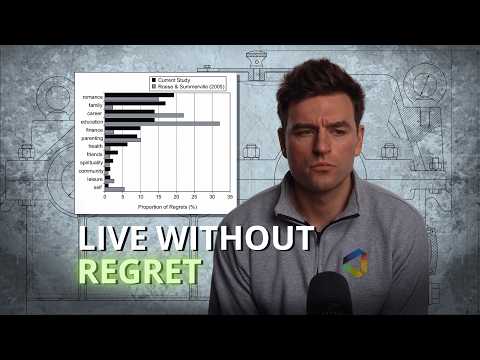
- Inaction regrets (the things we didn't do) haunt us longer than action regrets (the mistakes we made), indicating a need for bolder, values-driven life choices.
- Our brains are poorly wired for compounding consequences, explaining why small, poor daily choices regarding diet or spending create massive, hard-to-reverse problems over decades.
- Contrary to popular opinion, work can be a vital contributor to well-being if it satisfies the need for engagement, meaning, and accomplishment.
Channel: Ben Felix
Using Your Money To Be Happier
This content explores why prioritizing subjective well-being over raw wealth accumulation leads to better life outcomes, using the PERMA-V model to frame financial decisions.
Key Takeaways
- Financial success should be measured by its ability to support a 'good life' rather than just maximizing total wealth.
- The PERMA-V model (Positive emotion, Engagement, Relationships, Meaning, Accomplishment, Vitality) provides a robust framework for identifying what truly fosters life satisfaction.
- Income influences well-being, but the impact often plateaus or diminishes, suggesting that time use and lifestyle choices are more predictive of happiness than static wealth.
- Inaction regrets are more durable than action regrets, implying that individuals should prioritize values-based goals early to avoid long-term dissatisfaction.
Talking Points
Analysis
Strategic Significance This perspective introduces a critical hedge against the 'hedonic treadmill' where individuals sacrifice th...
Full analysis available on Pro.
Time saved:
Channel: Ben Felix